Exploring the intersection between AI investment, governance, organizational readiness, and business outcomes.

The HTEC AI Value Realization Report 2026: Financial Services & Insurance
Perspectives from 235 FSI C-suite leaders on investment, risk, governance, and scaling, drawn from a wider HTEC-commissioned cross-industry study of 1,500 executives conducted by Censuswide.
In Brief
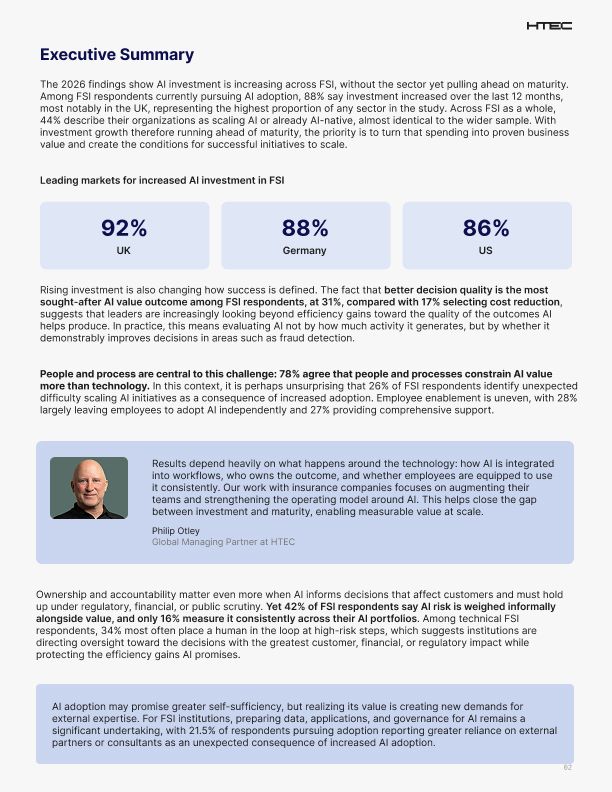
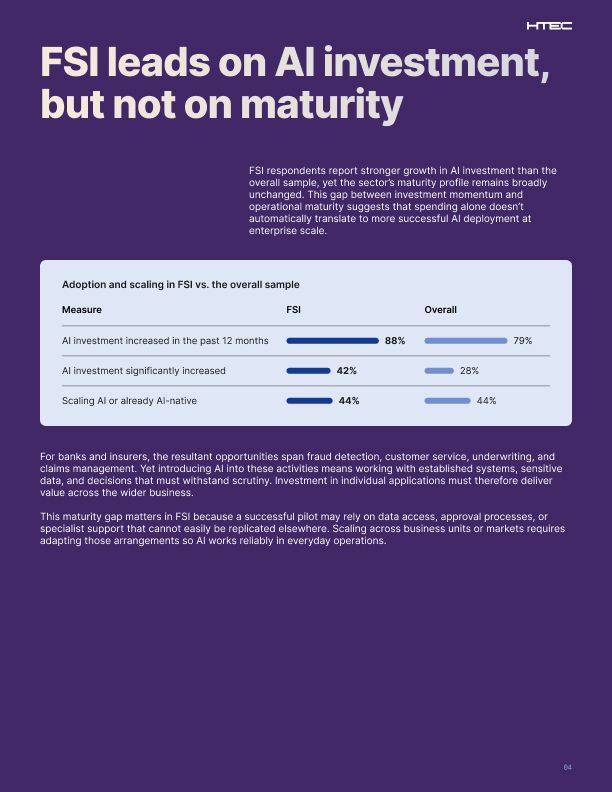
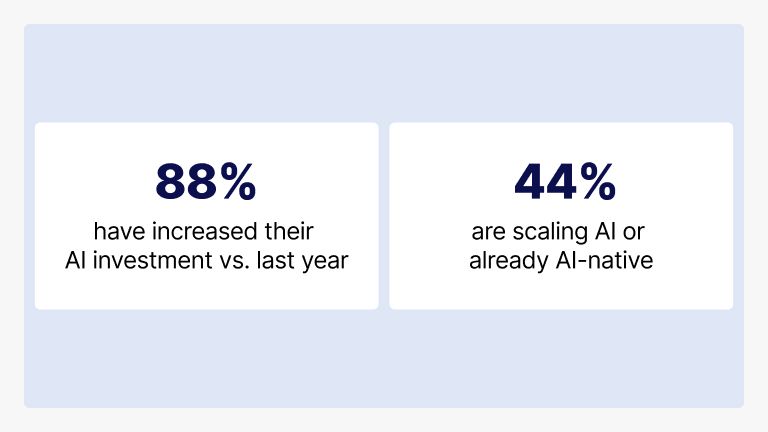
Banks and insurers are backing AI more heavily than any other industry in the study, with 88% of those pursuing adoption reporting higher investment over the past 12 months, compared with a 79% cross-industry average. Maturity paints a steadier picture with 44% describing their organizations as scaling or already AI-native, mirroring the full sample.
In lending, underwriting, claims, and fraud detection, a promising pilot must integrate with legacy systems, handle sensitive data, and support decisions that may later face scrutiny from regulators and customers. Value at scale, therefore, rests on how well data, controls, ownership, and employee readiness are prepared to carry a use case into daily operations.
The definition of success is also evolving as investment grows, with better decision quality now the most sought-after outcome at 31%, well ahead of cost reduction at 17%. Demonstrating that improvement calls for trustworthy inputs, an agreed baseline, and evidence that links each recommendation to a business or customer result.
Complete the form below to access the full report.

Download 2025 FSI State of AI Report
KEY FINDINGS
Spending Outpaces Maturity Across Financial Services
Research insights point to a widening gap between AI spending and the ability of financial institutions to prove, govern, and scale what they build. insights point to a widening gap between AI spending and organizations’ ability to track, govern, and execute AI initiatives effectively.
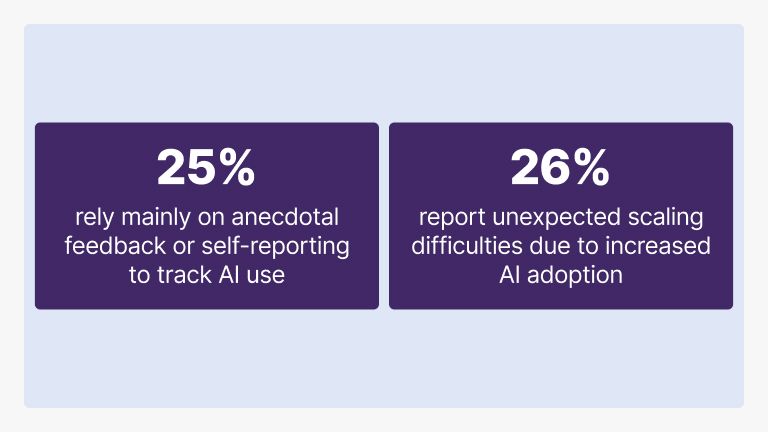
78% of financial services executives believe AI success is constrained more by people and processes than by technology
Factors slowing the realization of AI value
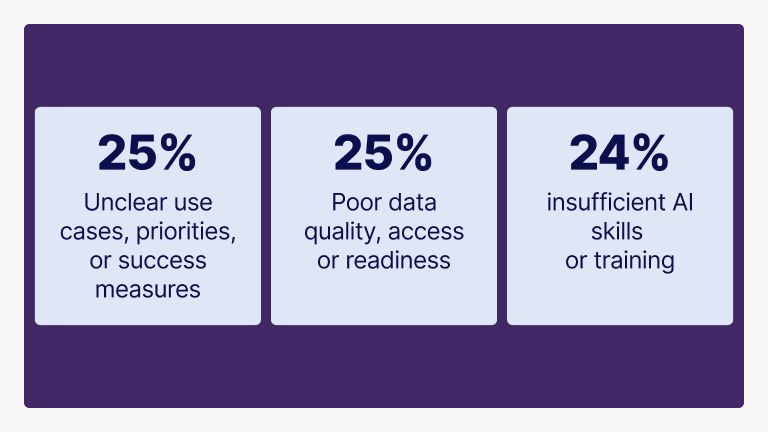
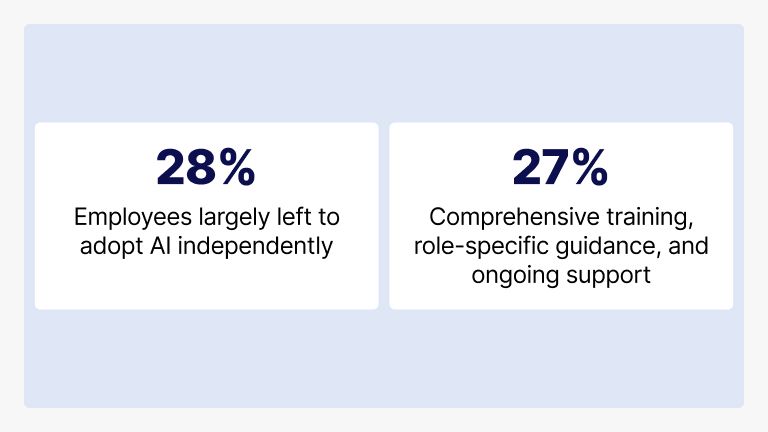
Inconsistent support for company-wide AI enablement
Limited alignment on AI purpose
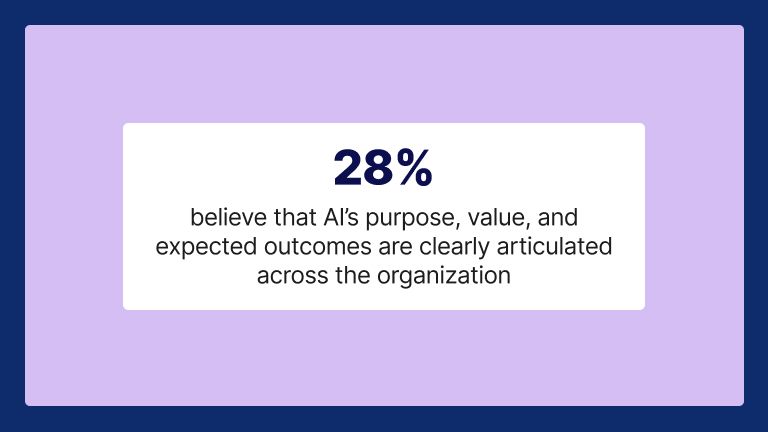
Leaders are defining the purpose of AI by the quality of what it produces, with 31% naming better decision quality as the top outcome, well ahead of the 17% who choose cost reduction. Proving that improvement takes trustworthy data, an agreed baseline, and employees who know when to trust, challenge, or escalate a recommendation.
Transparency becomes non-negotiable
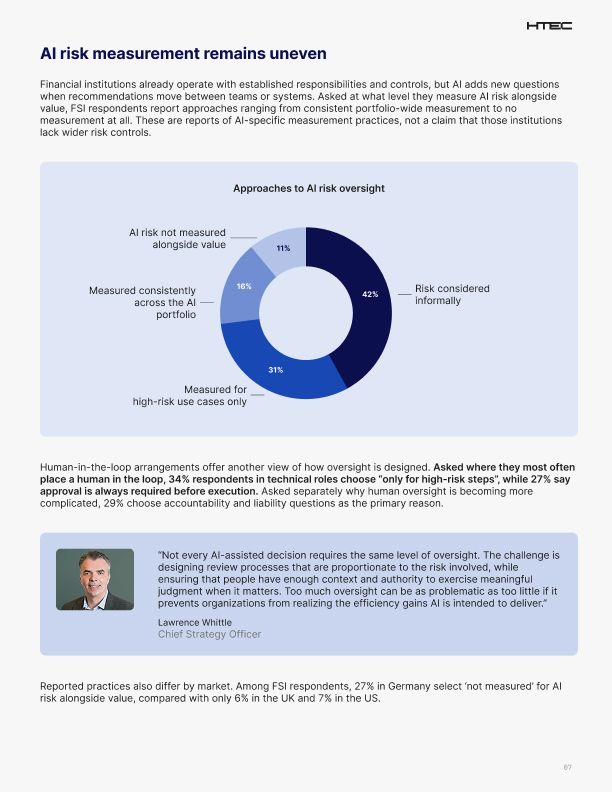
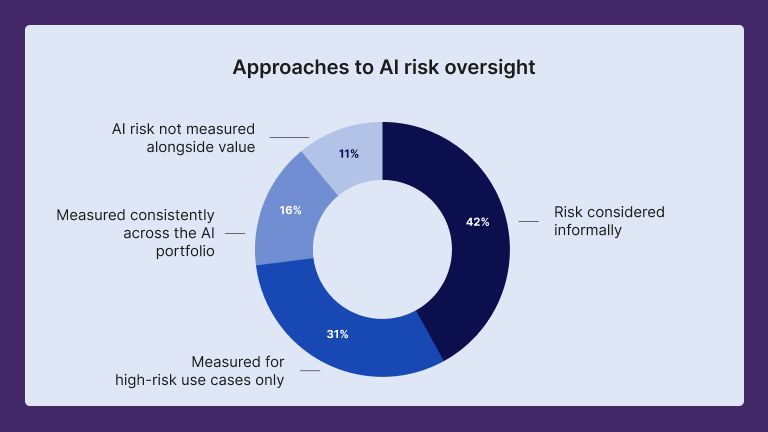
Risk oversight remains uneven
Visibility into AI decisions
When it comes to transparency
29%
expect full AI traceability from their technology partners, while
21%
only expect a policy statement.
For banks and insurers, trust increasingly depends on questions that technology alone cannot answer, including who owns the outcome, how much oversight is proportionate, and how a decision can be traced and explained to a regulator. Approaches to measuring risk vary widely, with 27% of German respondents reporting no measurement against 6% in the UK.
Where internal oversight is still taking shape, the contribution of an outside provider is harder to verify, too. With 21.5% of institutions reporting greater reliance on external partners or consultants, expectations for transparency into how their technology shapes decisions are rising as well.
Methodology
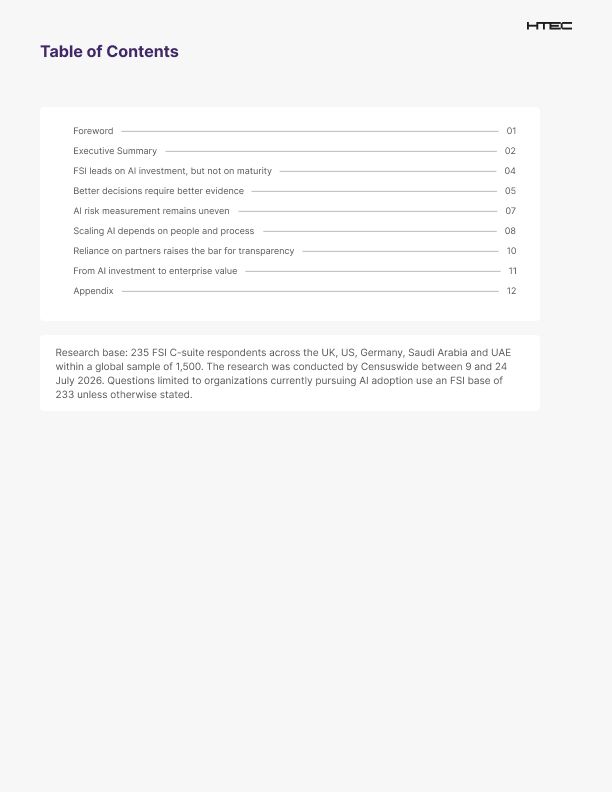
This report is based on market research commissioned by HTEC and conducted by Censuswide between 9 and 24 July 2026. It includes insights from 235 financial services and insurance C-suite executives across the UK, US, Germany, Saudi Arabia, and the UAE, within a global sample of 1,500. Questions limited to organizations currently pursuing adoption use a base of 233.
What’s next?
Scaling begins with a clearly defined business outcome, and the next edition of this research will follow how institutions put that into practice.
Download the research preview