Exploring the intersection between AI investment, governance, organizational readiness, and business outcomes.

The HTEC AI Value Realization Report 2026: Semiconductor Industry
Perspectives from 200 semiconductor executives and technology leaders on AI investment, value realization, risk management, and scaling, drawn from a wider HTEC-commissioned cross-industry study of 1,500 leaders conducted by Censuswide.
In Brief
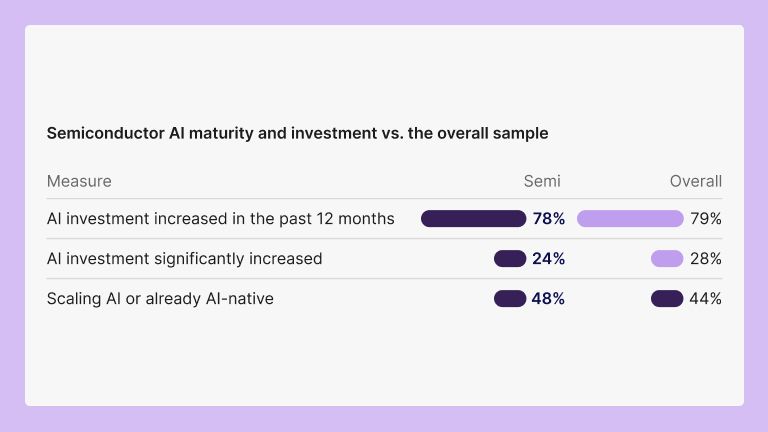
AI adoption in the semiconductor industry has entered a demanding new phase. Companies are scaling initiatives, funding them at higher levels, and expecting returns that reach well beyond the design lab. Yet the ability to turn technical progress into outcomes the business can verify is proving harder than many leaders anticipated.
Research findings suggest that success depends on more than engineering strength. Reliable baselines, shared KPIs, clear ownership, workforce enablement, and sound judgment about where human oversight belongs are emerging as the factors that separate a successful pilot from a repeatable result. Technical teams may demonstrate impressive gains in a single setting, but those gains carry commercial weight only once they hold across architectures, products, and production lines.
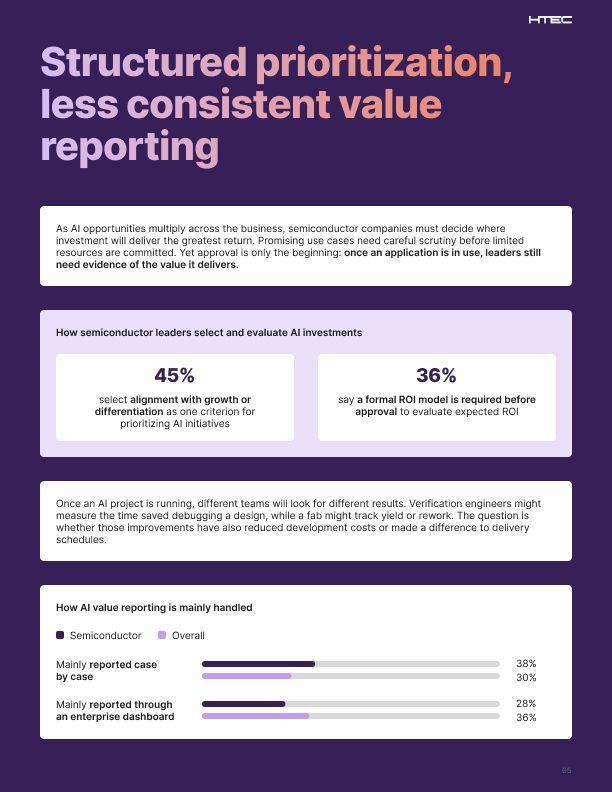
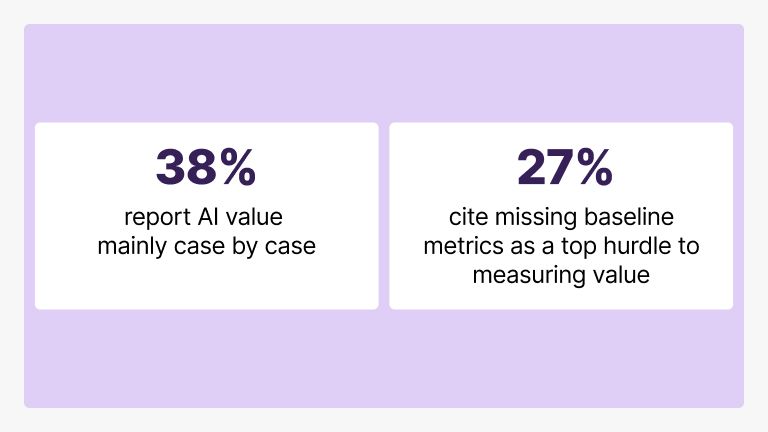
The conversation around AI value has matured alongside investment, and the sector’s engineering heritage shows in how projects are approved, with 36% requiring a formal ROI model before work begins.
Complete the form below to access the full report.

Download 2025 Semi State of AI Report
KEY FINDINGS
Maturity Is Running Ahead of Measurement
Research insights point to a gap between how widely semiconductor companies use AI and how well they can show its results. Projects are reviewed closely before they are approved, but reporting on their value is less consistent once they are up and running.
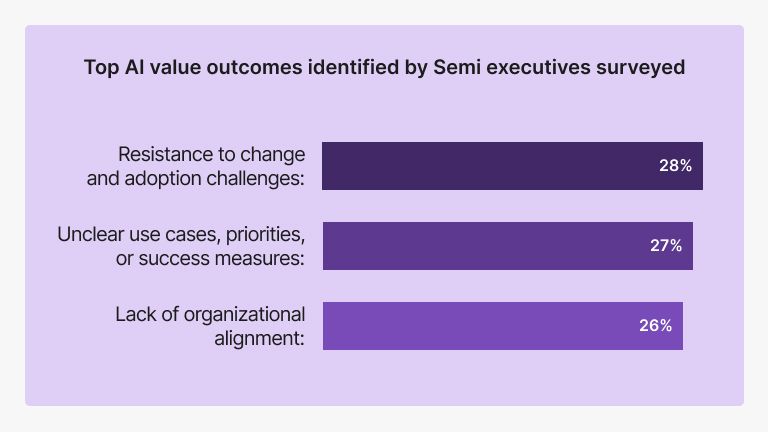
83% of semiconductor executives believe AI value is constrained more by people and processes than by technology
Factors slowing the realization of AI value in non-technical functions
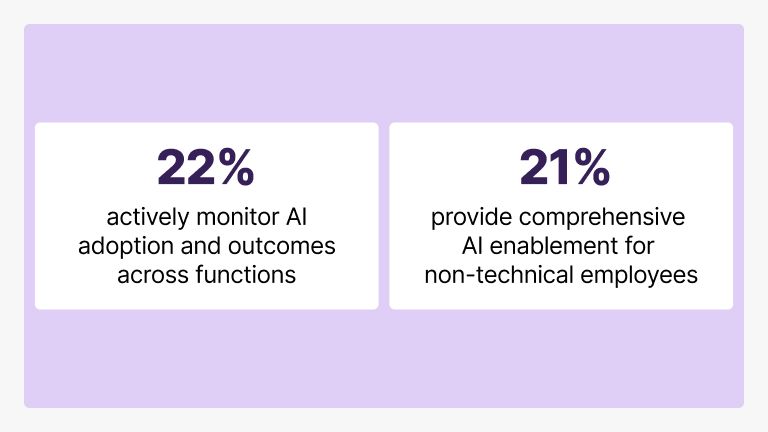
Inconsistent support for company-wide AI enablement
Limited alignment on AI purpose
Semiconductor teams bring exceptional depth to engineering, yet the capabilities needed to extend AI across the wider business have developed more slowly.
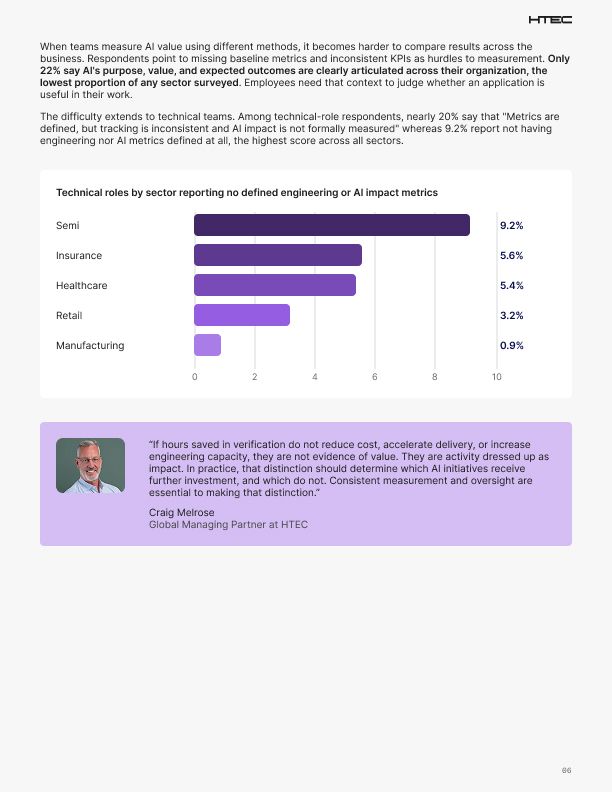
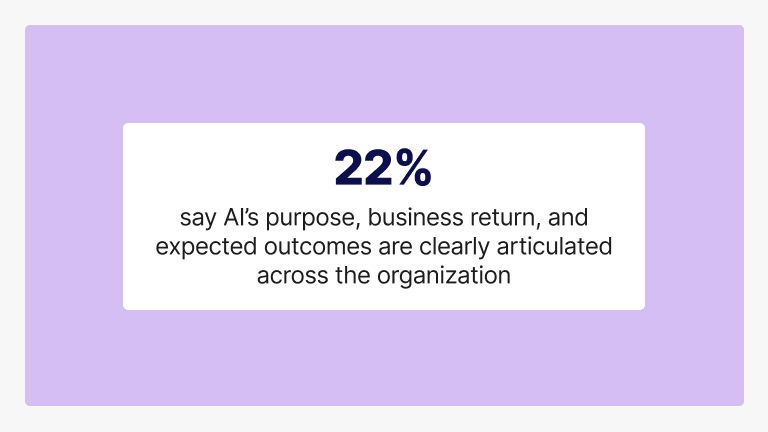
Only 22% say the purpose of AI is clearly articulated, the lowest share of any sector surveyed, making employees less likely to understand its benefits and adopt it in their daily work.
Risk Oversight Follows the Threshold
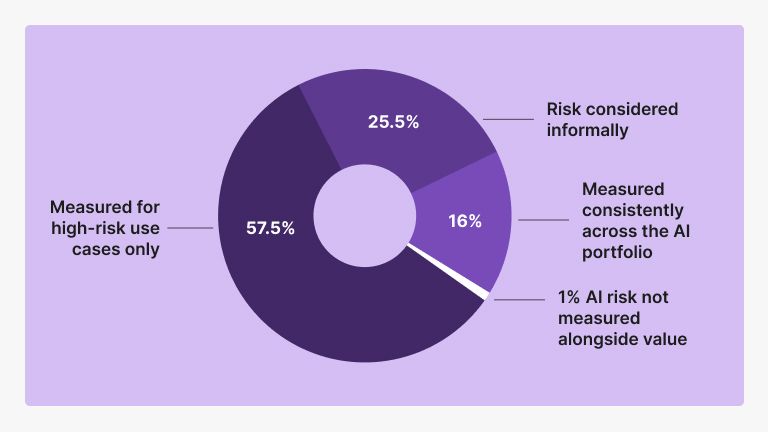
Approaches to AI risk oversight
Visibility into AI decisions
Where leaders want the most transparency from technology partners
35%
select delivery metrics and productivity claims
33%
select model or tool selection and justification
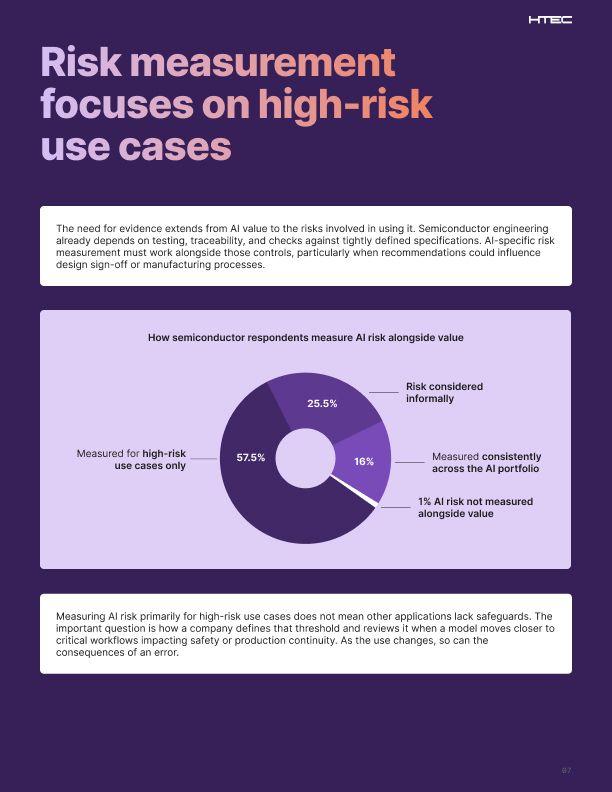
Semiconductor engineering already rests on testing, traceability, and checks against tight specifications, so most respondents reserve dedicated risk measurement for high-risk use cases. The open question is how that threshold is defined and revisited as an application moves closer to design sign-off or manufacturing control.
Among technical respondents, 33% name unpredictability and edge cases as the main obstacle to human oversight, the highest share of any sector. As outside tools enter proprietary EDA and fab environments, buyers also expect partners to stand behind the evidence for their technology, from delivery metrics to the reasoning behind each model choice.
Methodology
This report is based on market research commissioned by HTEC and conducted by Censuswide between 9 and 24 July 2026. It includes insights from 200 semiconductor executives and technology leaders across the UK, US, Germany, Saudi Arabia, and the UAE, within a global sample of 1,500. All respondents were pursuing AI adoption.
Download the research preview