



Newsroom All
Where journalists turn for expert insight. Media organisations regularly rely on our teams for expert commentary and analysis, contributing trusted insight across articles, interviews, and thought leadership.
Latest stories
-

HTEC Media Listicle
Bojan Sukalo, Industry Managing Partner Telecom bei HTEC, rät Unternehmen, die spezifischen regulatorischen Anforderungen der jeweiligen Arbeitslast gegen die Gesamtbetriebskosten abzuwägen, bevor sie Investitionen in die KI-Souveränität tätigen. Er empfiehlt den Einsatz einer Architektur auf Routing-Ebene, die Anfragen dynamisch auf der Grundlage von Souveränitätsregeln, Modelleignung und Kosten weiterleitet – und warnt dabei: „Die Grenzen zwischen […]



Looks like this one’s still taking shape. Come back soon.
In the meantime, there’s plenty more to read – explore our latest stories.





More stories
-

 Sava Marinkovich
HTEC Media Listicle

Sava Marinkovich, Senior Principal für KI-Strategie und -Lösungen bei HTEC, warnt vor einer „Inferenzlücke“, durch die die Produktionskosten von KI nach dem Rollout unerwartet stark steigen können. Er empfiehlt hybride Cloud-Edge-Architekturen nach dem Prinzip „Inferenz folgt der Nachfrage“, modulare Systeme für flexible Modellwechsel sowie eine gemeinsame Governance von CIO, CTO und CFO zur Steuerung der dynamischen Betriebskosten.
-

 Ronny Fehling
HTEC Media Byline

„Ohne Kennzahlen und Messungen lässt sich ein ROI allenfalls schätzen, was keine gute Basis für Business-Entscheidungen ist. Denn jedes Projekt braucht einen Kill-Switch – einen Entschei-dungspunkt, an dem anhand vorab festgelegter Ziele kontrolliert wird, ob es den erwünschten wirtschaftlichen Nutzen bringt,“ sagt Ronny Fehling, Chief AI Transformation Officer bei HTEC.
-

 Philip Otley
HTEC Media Byline

Philip Otley, Global Managing Client Partner at HTEC, highlights a $1.2 trillion execution gap in US private equity AI initiatives, driven by insufficient focus on measurable delivery and financial impact. He recommends establishing clear ownership, baselines, delivery milestones, and financial metrics from day one, warning that companies without demonstrable live AI impact risk losing buyer confidence and value at exit.
-

HTEC Media Interview

Alex Dukic, Chief Digital Officer at HTEC, argues that AI must shift from a technology experiment to a disciplined capital allocation decision in private equity. He warns that portfolio companies without live, measurable AI outcomes risk compressed exit multiples, while 18-month pilots without production results amount to value destruction.
-

 Sebastian Seutter
HTEC Media Listicle

Sebastian Seutter, Global Managing Partner für Kontinentaleuropa bei HTEC, betont, dass die reine Einführung von KI keinen Wettbewerbsvorteil mehr darstellt und Unternehmen KI daher tief in spezifische Prozesskontexte integrieren müssen. Statt menschliche Arbeitskosten ersetzen zu wollen, sollten Unternehmen internes Fachwissen als entscheidenden Kontextgeber und Verstärker nutzen, damit KI-Ergebnisse vertrauenswürdig und umsetzbar werden.
-
 Philip Otley
HTEC Media Listicle

Philip Otley, Global Managing Client Partner bei HTEC, sieht Datensilos, Altsysteme, regulatorische Hürden und fehlende Governance als zentrale Hindernisse für die KI-Skalierung in der Versicherungswirtschaft. Er empfiehlt, sich auf wenige wirkungsvolle Anwendungsfälle zu konzentrieren, Prüfpfade früh zu integrieren und bereichsübergreifende Datengrundlagen für Risikoprüfung, Preisgestaltung und Schadenabwicklung aufzubauen.
-
 Sava Marinkovich
HTEC Media Listicle

Sava Marinkovich, Senior Principal für KI-Strategie und -Lösungen bei HTEC, beschreibt „AI Restacking“ als Ansatz, der KI vom isolierten Zusatzmodul zum kognitiven Bindeglied zwischen Geschäftsprozessen, Daten, Anwendungen und Technologiearchitektur macht. Er empfiehlt Unternehmensarchitekten, die Orchestrierungslogik statt einzelner Tools in den Mittelpunkt zu stellen, um eine kontinuierlich lernende Organisation zu schaffen.
-
 Philip Otley
HTEC Media Interview

Philip Otley, Global Managing Partner at HTEC, warns that AI insurability challenges are outpacing market pricing capabilities. He recommends treating AI governance as a boardroom commitment by documenting approved tools, access controls, and usage monitoring immediately, rather than waiting for expected mandates over the next three years.
-
 Ronny Fehling
HTEC Media Listicle
Ronny Fehling, Chief AI Transformation Officer bei HTEC, warnt, dass herkömmliche ROI-Modelle Betriebskosten nach dem Rollout verschleiern und den Wert von Pilotprojekten überbewerten. Er empfiehlt kontinuierliche, meilensteinbasierte Produktionskriterien und eine Bewertung der KI anhand der Kosten pro akzeptiertem Ergebnis statt der reinen Kosten pro Token.
-
 Ronny Fehling
HTEC Media Listicle

Ronny Fehling, Chief AI Transformation Officer bei HTEC, warnt davor, traditionelle ROI-Logik auf KI anzuwenden, da sie Betriebskosten unterschätzt und isolierte Proof-of-Concepts überbewertet. Er empfiehlt, statische Business Cases durch messbare Produktionskriterien zu ersetzen – entscheidend sei nicht der Preis pro Token, sondern die Kosten pro akzeptiertem Ergebnis.
-
 Ronny Fehling
HTEC Media Listicle
Ronny Fehling, Chief AI Transformation Officer bei HTEC, sieht die Ursachen für das Scheitern von KI weniger in technischen Grenzen als in veralteten Betriebsmodellen. Er empfiehlt ein Portfolio klar abgegrenzter „Slices“ mit eindeutiger P&L-Verantwortung, eine Dual-Speed-Governance für stabile und dynamische Systeme sowie die Verankerung der KI-Verantwortung direkt in den Geschäftsbereichen.
-
 Sava Marinkovich
HTEC Media Byline

Sava Marinkovich, Senior Principal AI and Solutions bei HTEC, betont, dass die größten wirtschaftlichen KI-Kosten nicht beim Modelltraining, sondern bei der mit zunehmender Skalierung stark steigenden Inferenz anfallen. Er empfiehlt, KI als Betriebsmodell mit dynamischer Kostenlogik zu steuern, Hybrid-Cloud-Edge-Architekturen und funktionsübergreifende Governance einzusetzen und die Kostenentwicklung bereits vor dem Rollout zu berücksichtigen.
-
 Ronny Fehling
HTEC Media Byline

KI-Initiativen im Private-Equity-Bereich scheitern häufig, weil sie als statische Standardsoftware statt als dynamische, daten- und workflowabhängige Fähigkeiten behandelt werden. Ronny Fehling, Chief AI Transformation Officer bei HTEC, empfiehlt daher klar abgegrenzte „Production Slices“, die innerhalb von 3–6 Monaten messbare P&L-Effekte liefern sollen – in der Fertigung führte dieser Ansatz bereits zu rund 20 % kürzeren Wartezeiten.
-
 Ronny Fehling
HTEC Media Comment

The EU AI Act’s transparency obligations taking effect on 2 August 2026, as assessed by Ronny Fehling, Chief AI Transformation Officer at HTEC, carry direct financial implications for business leaders, with Fehling recommending that CFOs treat AI governance as a recurring operating investment rather than a one-off compliance cost — warning that organisations deferring that commitment until the high-risk deadlines of 2027–2028 will face significantly greater remediation expenditure than those building auditable, production-grade AI discipline now.
-
 Ronny Fehling
HTEC Media Comment

Ronny Fehling, Chief AI Transformation Officer at HTEC, warns that companies shouldn’t mistake the deferred high-risk requirements of the EU AI Act for free time. He recommends treating AI governance as a continuous operating discipline and building auditable AI immediately to secure a competitive edge.
-
 Ronny Fehling
HTEC Media Byline

Ronny Fehling, Chief AI Transformation Officer bei HTEC, führt das Scheitern von KI-Projekten im Private-Equity-Bereich auf isolierte Prototypen zurück, die mit bestehenden Systemen und Governance kollidieren. Er empfiehlt, Proofs-of-Concept durch fokussierte „Production Slices“ zu ersetzen, die KI mit integrierter Governance direkt in Live-Arbeitsabläufe einbetten und binnen drei bis sechs Monaten messbaren Mehrwert schaffen.
-
 Sava Marinkovich
HTEC Media Byline

Sava Marinkovich, Senior Principal AI Strategy and Solutions bei HTEC, definiert KI beim „AI Restacking“ nicht als einzelnes Werkzeug, sondern als kognitives Bindeglied über alle Architekturebenen hinweg. Unternehmensarchitekten sollten sich darauf konzentrieren, eine adaptive Orchestrierungslogik für den gesamten Stack zu entwickeln, statt isolierte KI-Plattformen auszuwählen.
-
 Sebastian Seutter
HTEC Media Listicle
Sebastian Seutter, Global Managing Partner bei HTEC, betont: Das Scheitern von KI-Pilotprojekten liegt nicht an der Technologie, sondern an strukturellen blinden Flecken wie undokumentierter Geschäftslogik. Unternehmen sollten KI daher direkt in eigene Prozesse einbetten und menschliches Fachwissen als Verstärker nutzen, statt es zu ersetzen.
-

 Alex Rumble
HTEC Media Comment

Alex Rumble, CMO at HTEC, emphasizes that enterprise AI adoption is limited by an organizational literacy gap rather than a lack of capable models. She recommends closing this gap by combining AI skills with existing workforce expertise, tracking usage and ROI, and building a culture of trust to drive adoption.
-
 Sebastian Seutter
HTEC Media Listicle
Sebastian Seutter, Global Managing Partner bei HTEC, führt das Scheitern von 95 % der KI-Pilotprojekte auf fünf blinde Flecken zurück – darunter die Abhängigkeit von dokumentiertem Wissen und die Unverzichtbarkeit menschlicher Expertise. Ein echter Wettbewerbsvorteil entsteht für ihn erst durch die konsequente Einbindung der KI in eigene Prozesse und die Kombination mit interner wie externer Fachkompetenz.
-
 Sebastian Seutter
HTEC Media Listicle

Sebastian Seutter, Global Managing Partner bei HTEC, betont: Dass 95 % der GenAI-Pilotprojekte scheitern, liegt an fehlendem Prozesskontext und unklaren Zuständigkeiten – nicht an Daten oder Modellen. Für eine erfolgreiche Skalierung empfiehlt er die direkte Integration von KI in operative Abläufe sowie die Kombination von internem Wissen mit externer Spezialisierung.
-

 Darko Todorovic
Press Release

HTECs Plattform „OneLoopAi“, entwickelt unter CTO Darko Todorovic, verknüpft KI-Nutzung, Leistung, Kosten und Nutzen in Echtzeit mit konkreten Geschäftsergebnissen. Durch die direkte Integration in Entwickler-Tools wie Jira, GitHub und GitLab misst sie Fortschritte über DORA-Metriken und KPIs, um Teams eine transparente Entscheidungsgrundlage statt rückblickender Berichte zu bieten.
-

 Alfred Olivares
HTEC Media Comment

Alfred Olivares, Global Managing Partner at HTEC, views the UK government’s £28 million investment in NHS AI diagnostics as a necessary first step that must go beyond procurement. He warns that AI initiatives stall without proper support, urging funds to be directed toward clinician training, change management, and workflow integration to effectively reduce waiting lists.
-
 Darko Todorovic
Press Release

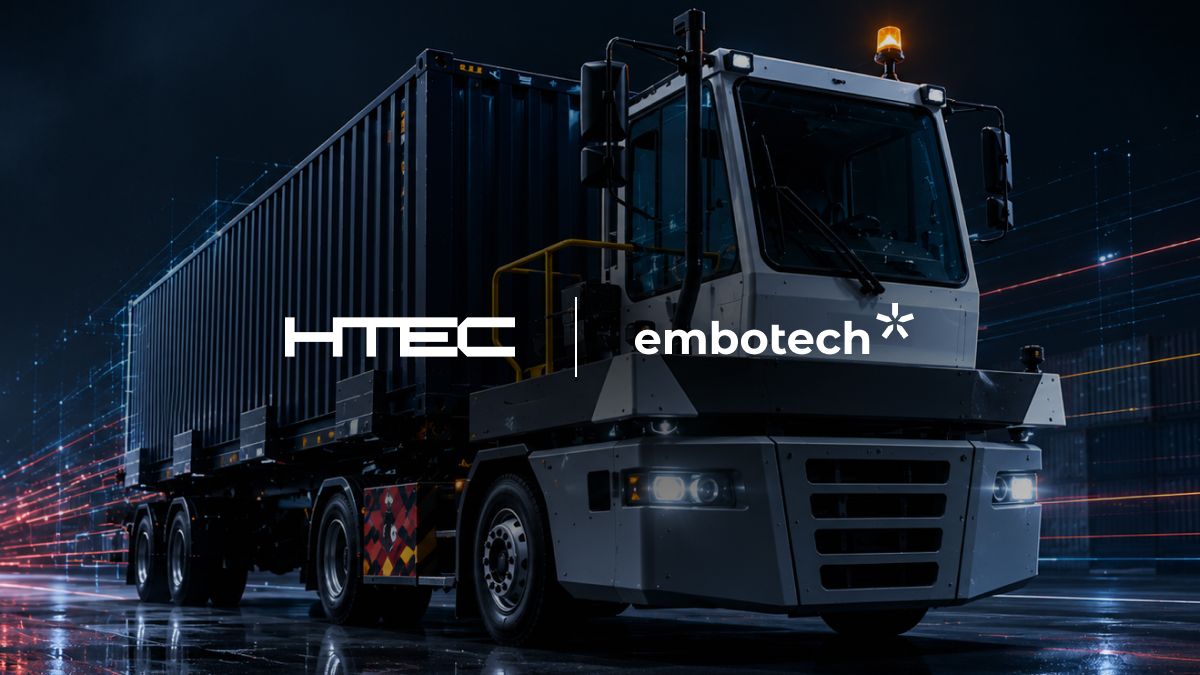
Die Partnerschaft zwischen HTEC und Embotech skaliert Level-4-Autonomie in der Intralogistik. Während Embotechs TÜV-zertifizierte Plattform bereits über 2.500 Fahrzeuge steuert, liefert HTEC die nötige Expertise für Embedded Systems und Fahrzeugintegration, um die Lösung fahrzeugunabhängig und standortübergreifend auszurollen.
-
Darko Todorovic
HTEC Media Mention

Datenschutzbedenken sind mit 74 % das größte KI-Einführungshindernis in der DACH-Region. Um die Lücke zwischen KI-Zielen und regelkonformer Skalierung im Mittelstand zu schließen, entstehen gezielte Lösungsansätze – von HTECs Plattform „OneLoopAi“ für Echtzeit-ROI-Transparenz über EU-Projekte wie TRUST bis hin zu kostenlosen Compliance-Tools wie Komplyzen.
-
Darko Todorovic
Press Release

Darko Todorovic, CTO at HTEC, emphasizes that scaling Level 4 autonomous logistics requires industrial-grade embedded engineering and OEM integration, not just AI advances. To address this, HTEC partnered with Embotech to scale certified autonomous driving technology—already powering over 2,500 daily vehicles across industrial sites—into real-world operations.
-
Darko Todorovic
Press Release
Darko Todorovic, CTO at HTEC, highlights that measuring enterprise AI ROI in software development led to the launch of OneLoopAi. Integrated with tools like Jira, GitHub, and GitLab, the platform connects AI usage to real-time engineering outcomes, enabling organizations to track delivery impact rather than just AI consumption.
-
Darko Todorovic
Press Release
Laut Darko Todorovic, CTO bei HTEC, schließt die neue Plattform „OneLoopAi“ die Transparenzlücke zwischen KI-Einsatz und tatsächlichem Geschäftsnutzen. Als neue Produktkategorie für „KI-Wert-Orchestrierung“ verknüpft sie Nutzung, Kosten und Wert in Echtzeit und ermöglicht so datenbasierte Entscheidungen statt rein rückblickender Berichterstattung.
-
Darko Todorovic
Press Release

Mit der Plattform „OneLoopAi“ verknüpft HTEC den KI-Einsatz in Tools wie Jira oder GitHub in Echtzeit mit konkreten Business-Ergebnissen. HTEC schließt damit die Lücke beim ROI-Nachweis für KI-Investitionen und erschließt wiederkehrende Umsätze bei Unternehmen, die KI-Ausgaben gegenüber Aktionären rechtfertigen müssen.
-
Darko Todorovic
Press Release
Die Partnerschaft zwischen HTEC und Embotech skaliert autonome Logistiklösungen (Level 4) an Industriestandorten. Laut CTO Darko Todorovic bringt HTEC die entscheidende Expertise für Embedded Systems und OEM-Integration ein, um Embotechs sicherheitszertifizierte Plattform auf verschiedene Fahrzeugtypen und Standorte zu übertragen.
-

 Craig Melrose
Press Release

Craig Melrose, Global Managing Partner at HTEC, stresses that the AI chip market is now driven by software maturity rather than hardware performance. He warns that hardware vendors must prioritize production-grade inference software stacks and ecosystem depth, or risk losing commercial deals to weaker chips with superior software.
-
 Alfred Olivares
Press Release
AI adoption in healthcare, as addressed by Alfred Olivares, Managing Partner (HLS) at HTEC, is progressing in breadth but failing in execution, with Olivares recommending that organisations take a holistic, workflow-level approach underpinned by robust data governance and a strategic focus on patient value creation — rather than treating AI purely as a cost-reduction tool.
-
 Ronny Fehling
HTEC Media Byline

Ronny Fehling, Chief AI Transformation Officer bei HTEC, betont: KI schafft im Private Equity den größten Wert, wenn sie direkt in die Prozesse der Portfoliounternehmen eingebettet wird. Durch messbare KI-Hebel – wie optimierte Engineering-Produktivität oder datengestützte Preisgestaltung – und eine Kopplung an finanzielle KPIs steigen operative Erträge und Investitionsqualität.
-

 Jörg Grotendorst
Press Release

Jörg Grotendorst, Automobilberater bei HTEC, betont: Die Skalierung von KI über Hardware, Software und Edge-Umgebungen ist eine systemische Herausforderung. Um verlässlichen ROI zu erzielen, müssen deutsche Autobauer von Pilotprojekten auf ein vernetztes, KI-orientiertes Betriebsmodell umstellen.
-

Press Release
HTEC hat auf dem Databricks Data + AI Summit das Open-Source-Tool „Lakebase“ vorgestellt. Durch Datenverzweigung ermöglicht es Data-Engineering-Teams, KI-Pipelines ohne Speicherduplizierung sicher in isolierten Umgebungen zu testen.
-

 Tim Sears
HTEC Media Byline

Tim Sears, Chief AI Officer at HTEC, warns that relying on a single foreign-hosted proprietary AI model poses severe operational risks. He advocates for a diversified strategy using high-performing open-source alternatives and localized inference to secure critical workflows.
-
 Alex Rumble
HTEC Media Comment

Speaking to HR magazine, Alex Rumble, CMO at HTEC said: “The focus shouldn’t be on technical AI skills in isolation, but on building foundational digital competencies alongside the critical thinking and socio-emotional skills that make people effective.”
-
 Craig Melrose
HTEC Media Blog

Craig Melrose, Managing Partner bei HTEC, betont: Um KI in der Halbleiterbranche von isolierten Pilotprojekten in nachhaltige Wettbewerbsvorteile zu verwandeln, braucht es konsequente Führung, den Abbau technischer Kompetenzlücken und sichere, skalierbare Edge-to-Cloud-Architekturen.
-

 Lawrence Whittle
Press Release
Lawrence Whittle, CSO at HTEC, notes that embedding agentic AI into the Dragonfly platform provides care management teams with proactive, automated decision-making tools that significantly cut administrative workload.
-
 Jörg Grotendorst
HTEC Media Blog

Jörg Grotendorst, Automobilberater bei HTEC, betont: Deutsche Autobauer müssen von KI-Pilotprojekten zu einem unternehmensweiten „AI-first“-Betriebsmodell übergehen und Hürden auf Führungsebene abbauen, um nachhaltigen Wettbewerbsvorteil und messbaren ROI zu sichern.
-
Lawrence Whittle
Press Release

Lawrence Whittle, CSO bei HTEC, betont, dass der Einsatz von Healthtech-Expertise und ein „AI-first“-Ansatz – wie beim Skalieren von Xsolis’ Plattform „Dragonfly“ – den Verwaltungsaufwand im Gesundheitswesen reduziert und die betriebliche Effizienz optimiert.
-
Press Release

HTEC, the global AI-first engineering and digital product development company, announced a strategic partnership with Xsolis, an AI-driven technology company that reduces administrative waste by enabling collaboration between healthcare providers and payers.
-

Press Release

„Viele Unternehmen stehen derzeit vor der Herausforderung, einzelne KI-Initiativen zu bündeln und ein KI-orientiertes Betriebsmodell zu etablieren, das messbare Ergebnisse und eine verlässliche Kapitalrendite ermöglicht“, so HTEC.
-

Press Release

HTEC, a global AI-first engineering and digital product development company, and Motion Applied are expanding their collaboration following a successful track record in developing advanced solutions across multiple industries.
-

Press Release

Laut einer HTEC-Studie liegt das deutsche Gesundheitswesen bei der KI-Einführung im internationalen Mittelfeld, hinter Spitzenreitern wie Saudi-Arabien, obwohl über die Hälfte der Organisationen KI bereits mehrfach nutzt. Die Haupthürden sind dabei Systemintegration, Qualifikationslücken und fehlende Abstimmung auf Führungsebene.
-
 Philip Otley
Press Release

According to the latest study by HTEC, scaling artificial intelligence in the telecommunications sector is hampered by operational fragmentation. Tim Sears, Chief AI Officer, recommends an immediate shift from isolated projects to systematic, enterprise-wide implementation, as the window of opportunity for operators to remain competitive leaves no room for any delays.
-
 Alex Rumble
Opinion Piece
Alex Rumble (CMO and AI Ambassador at HTEC) emphasizes that measuring AI success is shifting from basic adoption to tangible value. She recommends moving away from isolated pilot projects and focusing on deep operational integration, overcoming tech and skills barriers, and building internal capabilities to drive long-term ROI.
-
 Alex Rumble
Press Release

Alex Rumble, CMO und AI-Botschafter bei HTEC, fordert den Übergang von manuellen Einzelfreigaben im „Human-in-the-Loop“-Ansatz zu einem „Agent-in-the-Loop“-Modell. In diesem neuen Kontrollmodell agiert der Mensch als strategischer Dirigent, der die Autonomie-Grenzen und Risiken für KI-Systeme definiert.
-


HTEC Media Byline

Die Kombination moderner Sensortechnologien mit neuen Funktionen der künstlichen Intelligenz sorgt für eine Revolution im Bereich der Sicherheit in der Automobilindustrie. Über die Zukunft der Automobilbranche sprechen Stevica Đukic und Stefan Koncar, Experten von HTEC.
-
 Alfred Olivares
Press Release
Alfred Olivares, Managing Partner, Healthcare & Life Sciences bei HTEC weist darauf hin, dass der tatsächliche Nutzen der KI nur dann zum Tragen kommt, wenn die Technologie durchdacht in die täglichen klinischen Arbeitsabläufe integriert wird und die fachlichen Entscheidungen des medizinischen Personals unterstützt, anstatt sie zu ersetzen.
-
 Ronny Fehling
Press Release

While AI features prominently in today’s value-creation plans, many initiatives fail to translate into economic outcomes. The challenge lies in the “execution gap”—where initial architectures face the harsh reality of data quality issues, integration debt, and rising operating costs. In a high-stakes hold period, time is an unforgiving resource.
-
 Craig Melrose
Press Release
The semiconductor industry is hitting a “hardware trap” where advanced silicon is outperforming the software ecosystems built to support it. To prevent AI adoption from stalling like early electric vehicles, leaders must prioritize vertically integrated software stacks over raw processing power.
-
 Tim Sears
Press Release
HTEC‘s latest insight featured in Financial Times outlines a new delivery model built on continuity of context. By ensuring every line of code is traceable to a validated business goal, we’ve moved beyond “disposable demos” to high-impact production.
-
 Ronny Fehling
HTEC Media Listicle
Ronny Fehling, Chief AI Transformation Officer bei HTEC, betont, dass eine erfolgreiche KI-Transformation auf einer klaren Wertelogik und der systematischen Integration von KI in Unternehmensprozesse und Entscheidungsprozesse beruht.
-
 Craig Melrose
HTEC Media Interview

Many semiconductor companies have strong AI ambitions but still struggle to turn them into execution at scale. In this video interview, Craig Melrose, Global Managing Partner at HTEC, explains how stronger data foundations and clearer strategies can help unlock real business value.
-
 Ronny Fehling
HTEC Media Listicle
In einer Zeit, in der viele Unternehmen bei ihren KI-Initiativen mit Problemen bei der Skalierung und der praktischen Integration in ihre Prozesse konfrontiert sind, weist HTEC durch Ronny Fehling, Chief AI Transformation Officer, darauf hin, dass eine erfolgreiche KI-Transformation vor allem eine klare Wertelogik, strategische Priorisierung und die systematische Einbindung von KI in Prozesse, Entscheidungsfindung und Unternehmensinfrastruktur erfordert.
-
 Craig Melrose
HTEC Media Comment

Many organizations remain stuck in pilot phases because they test AI in low-risk, non-critical areas that fail to show meaningful impact. According to Craig Melrose, Global Managing Partner, Mobility and Advanced Technologies at HTEC, this is a fundamental risk management issue.
-
 Alex Rumble
HTEC Media Byline

Alex Rumble, CMO and AI Ambassador at HTEC is speaking about how the traditional Human-in-the-Loop (HITL) model is hitting a scalability wall. As AI moves from pilot projects into core business operations, HTEC is leading the shift from a traditional sign-off model toward a sophisticated architecture where human judgment is embedded into the very integrity of the system.
-
 Alex Rumble
HTEC Media Byline

Alex Rumble, CMO and AI Ambassador at HTEC, explores how organisations can keep humans meaningfully involved as AI continues to evolve, highlighting the need to balance automation with human judgment, oversight and accountability in increasingly AI-driven workplaces.
-

 Milos Cigoj
HTEC Media Byline

Durch unsere Expertise in der KI-Optimierung und modernen Softwarearchitekturen helfen wir Unternehmen, leistungsstarke KI-Lösungen zu implementieren, die nicht nur schneller und kostengünstiger sind, sondern auch einen kleineren ökologischen Fußabdruck hinterlassen.
-
 Craig Melrose
HTEC Media Comment

As automotive manufacturers increasingly adopt software‑defined factory approaches, Craig Melrose, Global Managing Partner at HTEC, comments that achieving meaningful ROI hinges on aligning digital transformation efforts with clear business outcomes, strong data practices and cross‑functional collaboration across the enterprise.
-
 Tim Sears
HTEC Media Byline

Tim Sears, Chief AI Officer at HTEC, explores how organisations can strike the right balance between AI adoption and human-centric work, highlighting the need to align technology, governance and workplace culture as AI becomes embedded in everyday operations.
-
 Craig Melrose
Press Release

In der Schweizer Industrie steht Präzision an erster Stelle. Doch wie die Technische Rundschau in ihrer neuesten Analyse darlegt, reicht physische Genauigkeit allein nicht mehr aus, um im globalen Wettbewerb zu bestehen. Das wahre Differenzierungspotenzial liegt heute in der Fähigkeit, KI-gestützte Analysen und maschinelles Lernen direkt in die komplexesten Fertigungsprozesse der Halbleiterindustrie zu integrieren.
-
 Craig Melrose
Press Release
Wie die ITwelt.at berichtet, scheitern viele Initiativen noch an der Komplexität der Implementierung und der Integration in bestehende Prozessketten. Bei HTEC sehen wir die Lösung nicht in isolierten Algorithmen, sondern in einem ganzheitlichen Engineering-Ansatz.
-
 Alex Rumble
HTEC Media Comment

As organisations rethink workplace culture and systems to ensure greater inclusion, Alex Rumble, CMO and AI Ambassador at HTEC, highlights that real progress depends on how technology, leadership and organisational design come together to create environments where everyone can thrive.
-
 Craig Melrose
Press Release
While AI adoption is accelerating across the semiconductor industry, only 27.4% of leaders feel ready to scale it — underscoring a growing gap between experimentation and execution. The findings point to the need for clearer strategies, stronger data foundations and organisational alignment to turn AI into a true competitive advantage.
-
 Alex Rumble
HTEC Media Interview
Alex Rumble, CMO and AI Ambassador at HTEC, highlights how small, deliberate actions are shaping the future for women in tech, stressing that equipping women with AI skills is key to driving innovation and long-term industry growth.
-

 Jamie Allsop
HTEC Media Byline
Die Versicherungsbranche befindet sich in einem tiefgreifenden Umbruch. Wie der Versicherungsbote treffend analysiert, hat ein neuer Wettlauf begonnen: Es geht nicht mehr nur um Risikomanagement, sondern um den strategischen Vorsprung durch Datenhoheit, KI-Integration und Innovationsgeschwindigkeit.
-
 Alex Rumble
Opinion Piece

Alex Rumble, AI Ambassador und CMO bei HTEC, argumentiert, dass bei Millionen KI‑Entscheidungen pro Tag menschliche Kontrolle schnell zur Illusion wird, da traditionelle „Human‑in‑the‑Loop“‑Ansätze bei komplexen Prozessen Verzögerungen, Inkonsistenzen und trügerische Sicherheit erzeugen, statt wirklich skalierbare KI‑Governance zu gewährleisten.
-
 Alfred Olivares
HTEC Media Byline
Bei HTEC begreifen wir KI nicht als isolierte Technologie, sondern als Teil eines hochsensiblen Ökosystems. Aufbauend auf unserer langjährigen Erfahrung in der Entwicklung missionskritischer Systeme unterstützen wir Unternehmen dabei, KI-Lösungen zu implementieren, die sowohl innovativ als auch sicher sind.
-
 Lawrence Whittle
Press Release

Lawrence Whittle, Chief Strategy Officer at HTEC, explains that achieving success requires setting ambitious goals, rethinking processes, and scaling AI through comprehensive enterprise roadmaps, with AI integrated as a central operational strategy rather than as isolated initiatives.
-
 Lawrence Whittle
Press Release

Lawrence Whittle, Chief Strategy Officer at HTEC, highlights that while AI is moving from experimentation to organisational integration, many businesses still struggle with cultural, operational and governance barriers. He emphasises that scaling AI successfully requires embedding it into core business strategy rather than treating it as a series of isolated initiatives.
-
 Lawrence Whittle
Press Release

Lawrence Whittle, Chief Strategy Officer at HTEC, says that as AI moves from experimentation to organisational integration, the real challenge lies in embedding it into everyday workflows and decision-making. He highlights that overcoming cultural, operational and governance barriers is essential to turning AI from isolated initiatives into a true driver of business transformation.
-
 Alex Rumble
HTEC Media Byline

Embedding AI across all business functions is no longer optional — Alex Rumble, AI Ambassador and CMO at HTEC, warns that only organisations breaking silos will capture the full value of AI-driven innovation.
-
 Sebastian Seutter
HTEC Media Listicle

Im Listicle „Von Pilotprojekten zur Strategie – in vier Stufen zur erfolgreichen KI-Transformation“ zeigt Sebastian Seutter, Global Managing Partner bei HTEC, wie Unternehmen den Schritt von KI-Pilotprojekten zu einer strategischen, unternehmensweiten KI-Transformation schaffen können.
-
 Jamie Allsop
HTEC Media Interview

Jamie Allsop, Managing Partner in Financial Services at HTEC says “AI adoption in banking has been cautious and slow because of regulation and data privacy — but the real friction begins when firms try to connect isolated use cases and integrate AI into core systems. That’s where talent, governance, and execution become critical.”
-

Press Release

Almost all C-suite executives say their organisations have deployed AI, but fewer than half have embedded it broadly, with surveys highlighting integration hurdles, talent shortages and prioritisation gaps that hinder enterprise-wide scaling.
-

Press Release
Despite nearly all C-suite leaders having deployed AI technologies, a recent survey shows many organisations still struggle to embed and scale AI across multiple functions due to integration challenges, skills shortages and prioritisation issues.
-

 HTEC
HTECPress Release

Despite widespread AI adoption, 75% of enterprises struggle to scale beyond pilots, hindered by data, talent and integration barriers. Why turning early AI wins into enterprise‑wide impact remains elusive and what organisations must do to bridge the gap between experimentation and operational value?
-
 HTEC
HTECPress Release

Despite strong C‑suite commitment to AI, most organisations still struggle to scale use cases beyond pilots because of data silos, governance gaps and talent shortfalls. See why executive sponsorship alone isn’t enough and what leaders must prioritise to turn AI adoption into measurable business value.
-
 Lawrence Whittle
Press Release
Only 25 % of businesses have scaled AI beyond pilot projects, even though adoption is widespread, the article finds. Organisations are struggling with integration, data quality and skills gaps that block broader deployment. Why AI still remains stuck in experimentation and what leaders can do to unlock enterprise‑wide impact?
-
 Lawrence Whittle
Press Release
KI-Pilotprojekte sind oft erfolgreich, aber die eigentliche Herausforderung beginnt, wenn Unternehmen versuchen, sie zu skalieren – und es ist nicht die Technologie, die sie daran hindert, sondern Daten, Talente und Prozesse.
-
 Lawrence Whittle
Press Release

Unternehmen stecken fest: KI-Pilotprojekte sind erfolgreich, aber die Skalierung innerhalb des Unternehmens scheitert – und daran sind nicht die Technologien schuld, sondern Menschen, Prozesse und Daten.
-
 Lawrence Whittle
Press Release
Unternehmen riskieren, ins Hintertreffen zu geraten, wenn sie KI als Nebenprojekt behandeln – ein echter Wettbewerbsvorteil entsteht nur, wenn KI in den Kern jeder Geschäftsentscheidung eingebettet ist.
-
 Sebastian Seutter
HTEC Media Feature

Viele KI-Projekte zeigen nie Wirkung, weil sie isolierte Testballons sind – der Unterschied zwischen Erfolg und Misserfolg liegt nicht in der Technologie, sondern darin, wie Ambitionen, Datenstrategie und Kultur in das Unternehmen eingebunden werden.
-
Jamie Allsop
Press Release

Laut HTEC-Studie setzen 44 Prozent der deutschen Finanz- und Versicherungsunternehmen KI bisher nur punktuell ein. Die flächendeckende Integration bleibt aus – trotz wachsender strategischer Relevanz im Markt.
-
 Milos Cigoj
HTEC Media Comment

How can compliance managers learn from past mishaps and protect their organizations as AI becomes increasingly integrated into every part of our working lives? Look at the tips for 2026 from our experts, Gary Duggan and Milos Cigoj.
-
 Milos Cigoj
HTEC Media Comment
See Milos Cigoj, Director of Quality and Regulatory, HLS in HTEC, commentary on how in 2026 is AI likely to move further into every part of our businesses – particularly with the development of digital agents.
-

 Mark Abolafia
HTEC Media Comment

Mark Abolafia, Senior Partner, Telecommunications, HTEC explains, that operators can now expose network capabilities, build developer ecosystems, and unlock network-as-a-service models. Those acting now will turn infrastructure investments into recurring revenue streams by 2026.
-
 Alex Rumble
HTEC Media Byline
Zu viele KI-Initiativen bleiben in der Pilotphase stecken – doch der wahre Wert entsteht erst durch die Skalierung der KI in zentrale Geschäftsprozesse. Alex Rumble, CMO und AI Ambassador bei HTEC, erklärt, was Unternehmen zurückhält (Datenqualität, Kompetenzen, unklarer ROI) und was Führungskräfte tun müssen, um vom Proof-of-Concept zu messbaren Ergebnissen zu gelangen.
-
 Alex Rumble
Opinion Piece
Während Unternehmen weltweit Milliarden in KI-Systeme investieren, fehlt es oft an der entscheidenden Kompetenz, sie wirklich verantwortungsvoll und wirksam zu nutzen. Ohne Orientierung, Bildung und klare Leitlinien entsteht kein Fortschritt, sondern Risiko — und genau hier beginnt die eigentliche Führungsaufgabe.
— aus dem Artikel von Alex Rumble, CMO bei HTEC -
 Sebastian Seutter
Podcast

Sebastian Seutter von HTEC befasst sich im Podcast „Change by Design” eingehend mit der Leitung komplexer Transformationen – darunter die Steuerung großer Programme, das Management von Umfang und Stakeholdern sowie der Einsatz von KI in der Projektarbeit, bei Ausschreibungen und der Softwarebereitstellung.
-

 George Brady
HTEC Media Feature

George Brady, VP of Financial Services Innovation at HTEC, says that financial services are shifting from endless AI pilots to focused, measurable programmes in 2026. Click to read his full outlook on what really matters in 2026.
-
 Jamie Allsop
Press Release
Eine neue, von HTEC unterstützte Studie hat ergeben, dass 44 % der deutschen Banken und Versicherungen KI derzeit nur in vereinzelten Bereichen einsetzen, nicht jedoch in allen Prozessen – wodurch viel Potenzial ungenutzt bleibt. Integrationshindernisse wie Altsysteme, Qualifikationslücken und strategische Ausrichtung verlangsamen eine breitere Einführung.
-
 Sebastian Seutter
Podcast

Sebastian Seutter, Geschäftsführer von HTEC DACH, war kürzlich zu Gast im Podcast „Behind the C“ und sprach über seine Führungsqualitäten und seine Karriere von der Beratung bis zur Technologiebereitstellung. „Es geht nicht darum, was ich mache oder was auf meiner Visitenkarte steht, sondern darum, mit wem ich zusammenarbeite.“
-
 Mark Abolafia
HTEC Media Comment

Telecom operators face a pivotal choice: ride the AI wave or risk being left behind. A new Agile Telco report highlights the need to execute at speed and modernise legacy stacks, and Mark Abolafia, Senior Client Partner at HTEC, shared his perspective on tackling these challenges.
-
 Alex Rumble
HTEC Media Byline

As organisations shift to an “AI-first” mindset in 2026, Alex Rumble, AI Ambassador & CMO at HTEC, emphasises that embedding AI across core business functions — rather than isolated pilots — is key to unlocking sustainable innovation and competitive advantage in the year ahead.
-
 Alfred Olivares
HTEC Media Byline

Alfred Olivares, Global Managing Partner — Healthcare & MedTech at HTEC argues that, by augmenting clinicians instead of replacing them, AI can cut administrative work, unlock continuous care and meet rising patient expectations — all while preserving equity and compassion at the heart of the health service.
-
 Alex Rumble
Opinion Piece
Alex Rumble, KI-Botschafter und CMO bei HTEC, in einem Meinungsbeitrag darüber, dass die Einführung von KI nur dann erfolgreich ist, wenn die Führungskräfte sie verstehen und sich dafür einsetzen – und nicht nur, wenn die IT-Abteilung Tools bereitstellt.
-
 Sebastian Seutter
HTEC Media Feature
Der End-to-End-Engineering-Ansatz von HTEC vereint Strategie, Design und Umsetzung, um skalierbare digitale Produkte vom Konzept bis zum Betrieb zu entwickeln, erklärt Sebastian Seutter, Global Managing Partner bei HTEC, und zeigt, wie Unternehmen Innovation schneller und nachhaltiger vorantreiben können.
News
Latest news from HTEC
Read about our latest partnerships, initiatives, and company announcements.
-

AI Investment Is Outpacing Organizations’ Ability to Realize Value, New HTEC Research Finds
HTEC, a global product engineering and AI transformation company, today released preview findings from its AI Value Realization Report 2026, based on a survey of 1,500 C-level executives across the US, UK, Germany, and the UAE. The research reveals that…
-

HTEC and Modular Extend MAX and Mojo to Google TPU, Cutting AI Hardware Enablement from Years to Months
HTEC, a global AI-first engineering and technology services company, and Modular have demonstrated Modular’s AI software stack running on Google’s TPU architecture. Presented at ModCon 2026, the work shows that support for a new silicon target can be delivered by…
-
HTEC Introduces “OneLoopAi” Redefining How Enterprises Scale AI Into Production
HTEC, the global technology and engineering firm headquartered in Palo Alto, Silicon Valley, today announced it has launched HTEC OneLoopAi—a new platform and approach to managing AI execution and value realization.
-
HTEC and Embotech Partner to Scale Deployment of Autonomous Driving Solutions for Industrial Logistics
HTEC, a global technology and AI engineering company headquartered in Silicon Valley, and Embotech, a global leader in safety-certified Level 4 autonomous driving solutions for industrial logistics, today announced a strategic partnership to scale deployment of Embotech’s autonomous driving solutions…
-
HTEC Showcases Lakebase Branching at Databricks’ Data & AI Summit
Palo Alto, CA — 26 June 2026 — HTEC, the global technology and AI engineering firm headquartered in Silicon Valley, last week showcased how it used Lakebase data branching to enable faster development, safer operations, and new possibilities for data-driven…
Press Kit
This comprehensive resource provides you with all the essential materials you need to accurately represent our company in your publications and media coverage.
Access and download our company materials, including the official logo and high-resolution images.

Where can
we help?
Complete the form and an HTEC expert will contact you shortly.
Looking to join our team?
Visit our Careers & Culture page
