Executive Summary: The State of AI in Healthcare and Life Sciences 2025-2026
AI is advancing across healthcare and life sciences, but scaling it safely and effectively across clinical, operational, and R&D environments remains a far more complex challenge.
In Brief
Based on insights from 253 C-level healthcare and life sciences executives.
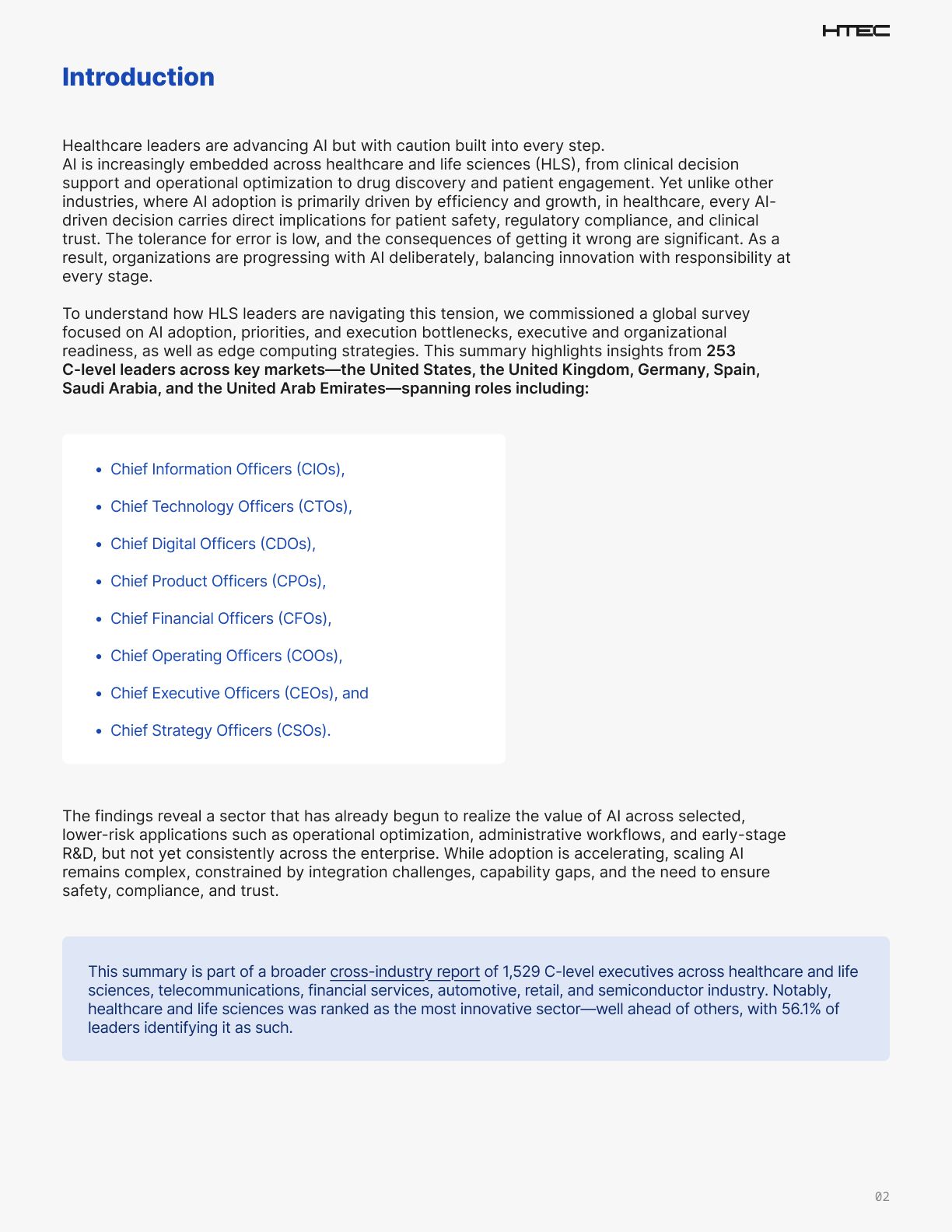
The findings show that AI is already firmly on the agenda across healthcare and life sciences, with adoption moving beyond experimentation and into multiple functions. But many organizations still rely on fragmented deployments concentrated in lower-risk, high-value areas such as operational optimization, administrative workflows, and early-stage R&D.
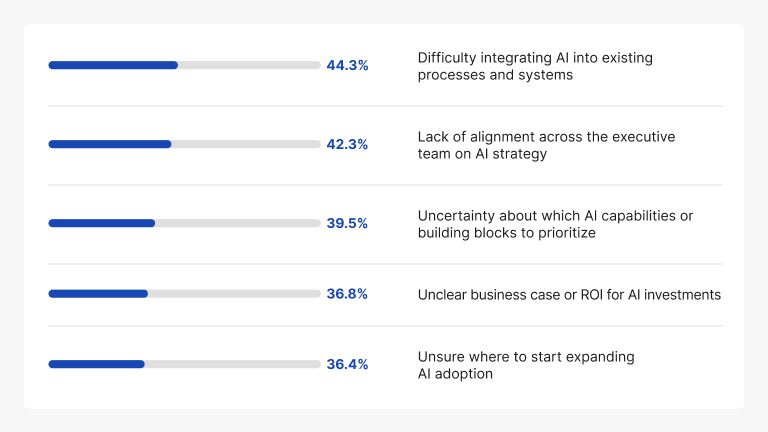
Integration challenges, capability gaps, and execution-level leadership alignment continue to slow deeper AI adoption. In a sector where every AI-driven decision has implications for patient safety, compliance, and trust, scaling AI requires stronger foundations across data, governance, workflows, and cross-functional execution.
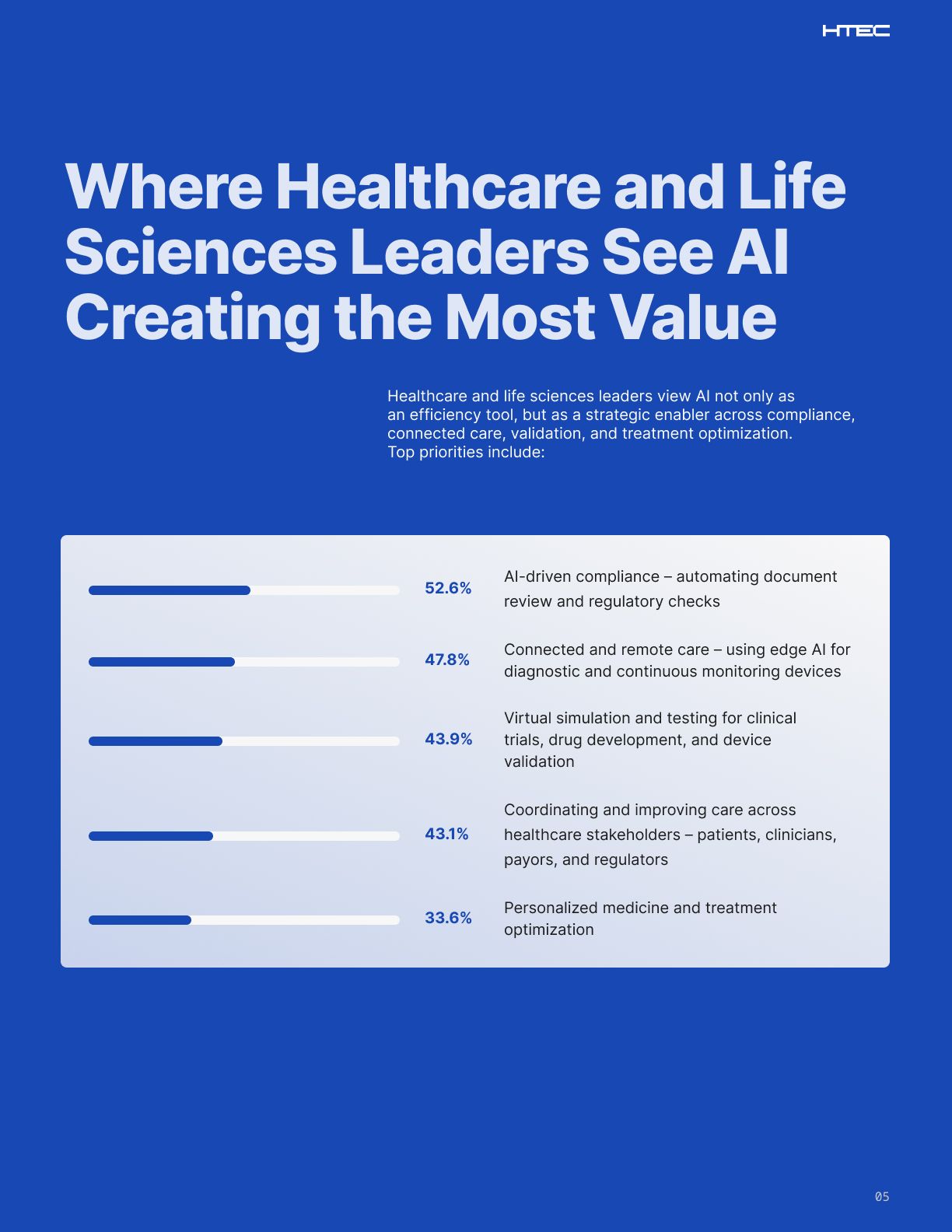
Our experience with healthcare and life sciences clients at HTEC reflects these findings. Organizations are making real progress in areas such as AI-driven compliance, connected and remote care, simulation and validation, and treatment optimization. But the next challenge is turning those targeted advances into repeatable, organization-level value across highly regulated and operationally complex environments.
Download the Retail Report
Complete the form below to access the report.

Download Cross-Industry View of the State of AI in 2025-2026 Report
KEY FINDINGS
AI Adoption Across Healthcare and Life Sciences Organizations
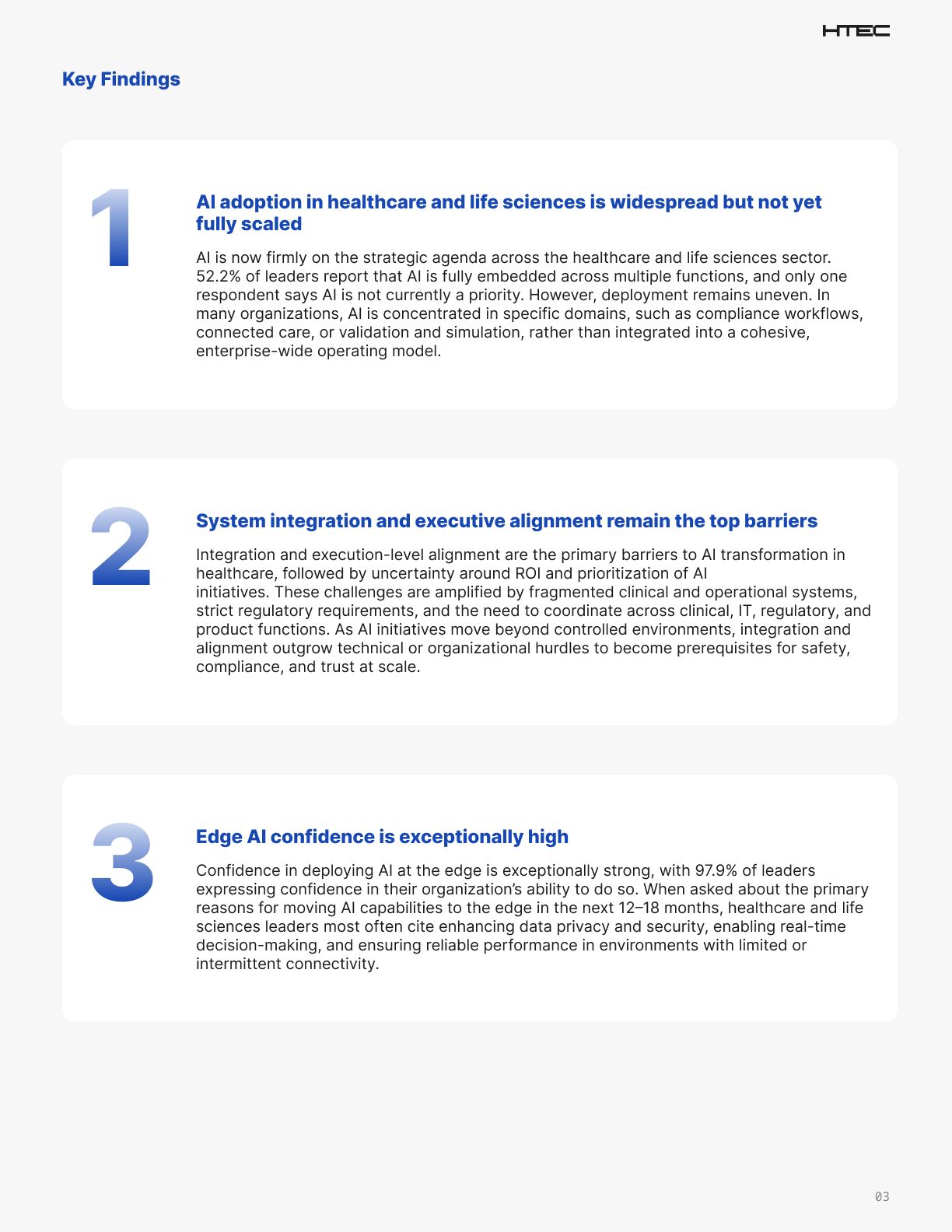
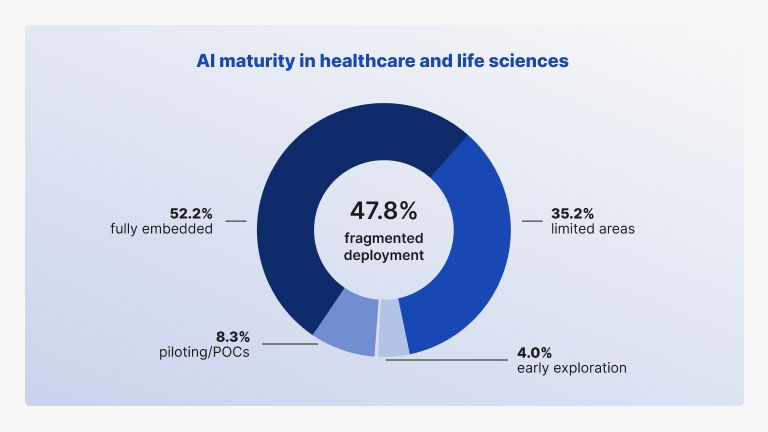
AI adoption in healthcare and life sciences is widespread. Still, close to a half of organizations remain in fragmented stages of adoption, relying on limited deployments, pilots, or isolated use cases.
Top Barriers to Deeper AI Integration
Edge AI: Bringing Intelligence Closer to the Point of Care
Familiarity &
Confidence
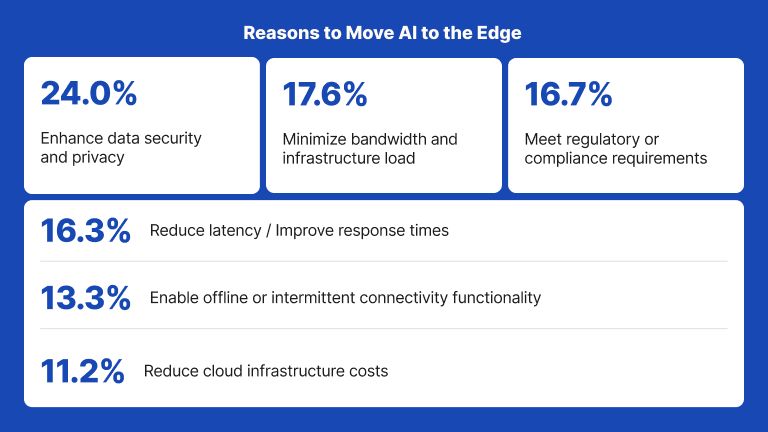
Why HLS Organizations
Move AI to the Edge
How They Approach
Edge-to-Cloud Integration
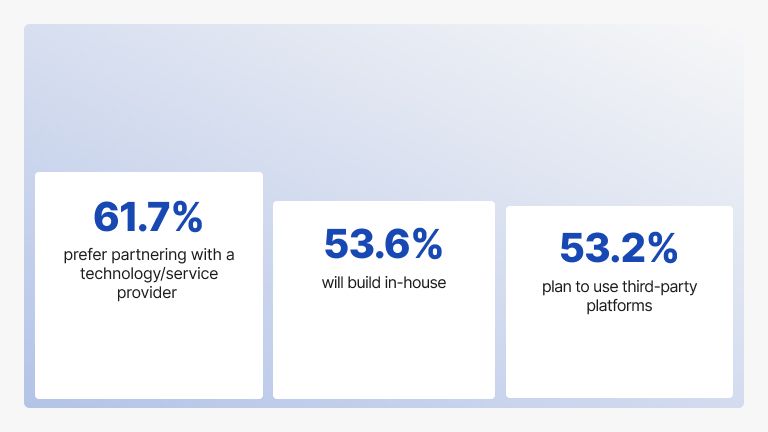
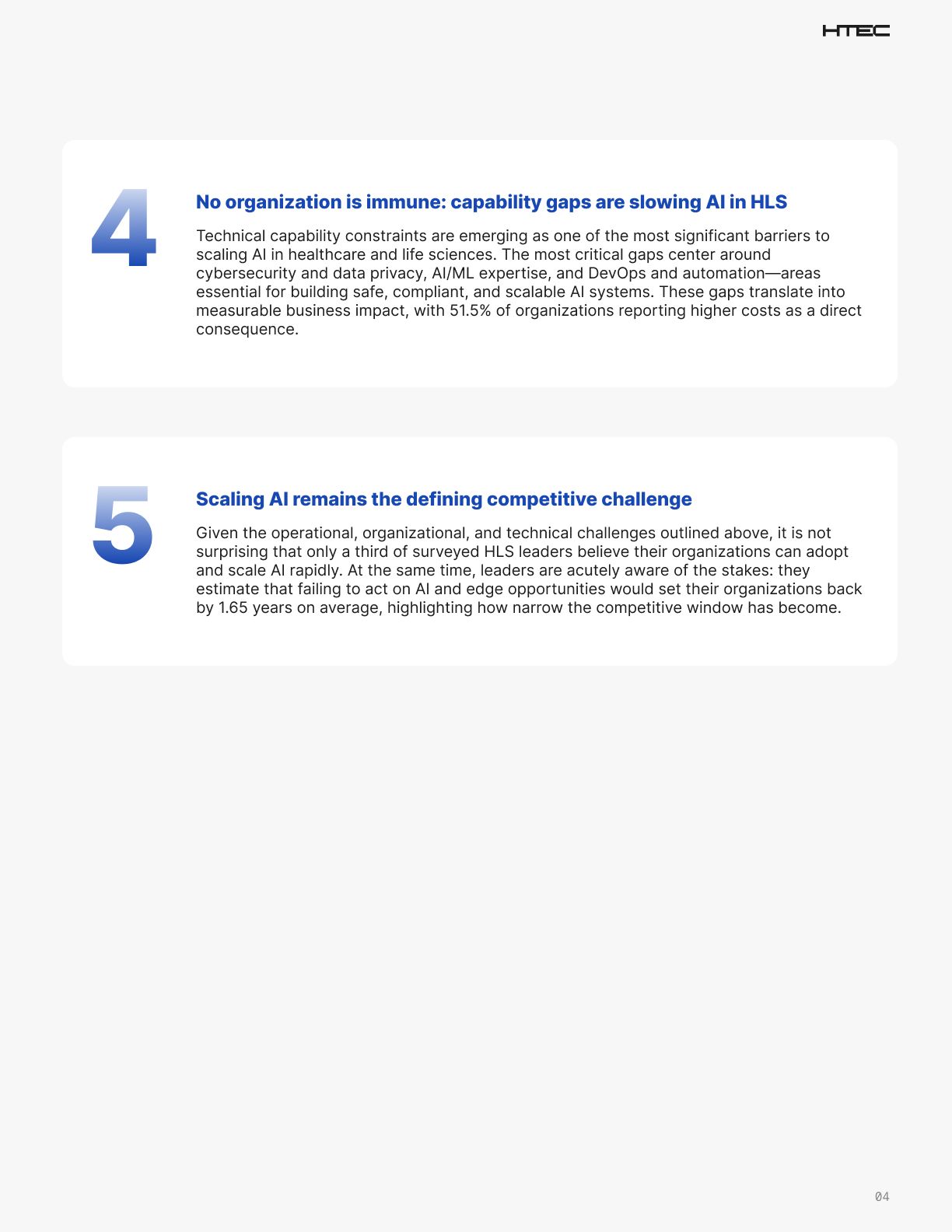
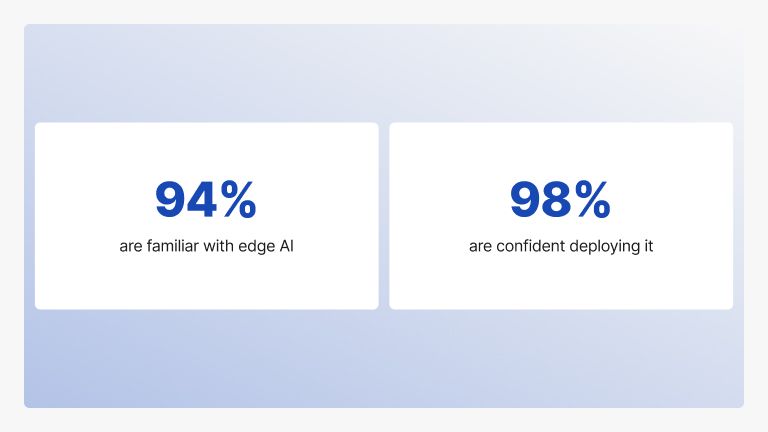
Edge AI stands out as a major strategic priority in healthcare and life sciences. Leaders associate it most strongly with stronger data privacy and security, real-time decision-making, and reliable performance in environments with limited or intermittent connectivity. Hybrid edge-to-cloud approach balances speed and specialized expertise with control over sensitive systems, while ensuring secure, compliant, and scalable data flows.
AI Transformation Execution Challenge
Executive AI Alignment and Literacy
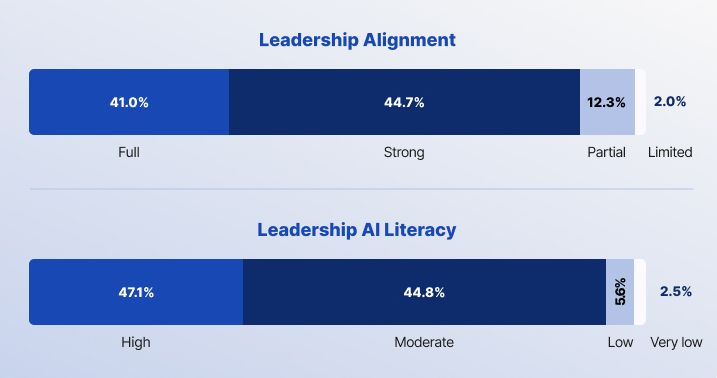
Leadership alignment is relatively strong, but AI literacy is more uneven. More than half of healthcare and life sciences leaders fall into moderate, low, or very low confidence levels, suggesting that strategic intent is ahead of execution fluency.
Keeping Pace is Challenging
Leaders estimate that falling behind on AI and edge initiatives would set their organizations back by
1.65 years on average
While only
24.8%
believe they can adopt and scale AI rapidly.
Methodology
The report was commissioned by HTEC and conducted by Censuswide. It includes insights from 253 C-level healthcare and life sciences executives, gathered as part of broader cross-industry research into the perspectives of 1,529 C-suite executives across the USA, UK, Germany, Spain, Saudi Arabia, and the UAE, spanning CEO, CIO, CTO, CDO, CFO, COO, CPO, and CSO roles.
What’s next?
The progress in healthcare and life sciences is strongest in targeted, lower-risk areas, while scaling remains constrained by integration challenges, capability gaps, and the need to align clinical, technical, and regulatory stakeholders around how AI is actually used.
At the same time, edge AI is accelerating the shift toward more distributed, real-time intelligence, where data privacy, reliability, and performance are critical. As our experts emphasize, real value emerges only when AI is embedded into workflows in a way that supports how care is delivered in practice.
Download the Healthcare and Life Sciences Report