Executive Summary: The State of AI in the Semiconductor Industry in 2025-2026
Semiconductor organizations are deploying AI across critical functions, yet enterprise-scale integration across design, software, and manufacturing systems remains uneven.

In Brief
Based on insights from 250 C-level semiconductor executives.
The findings indicate that most semiconductor organizations have yet to achieve enterprise-scale AI integration, with deployments concentrated in specific use cases or pilot programs.
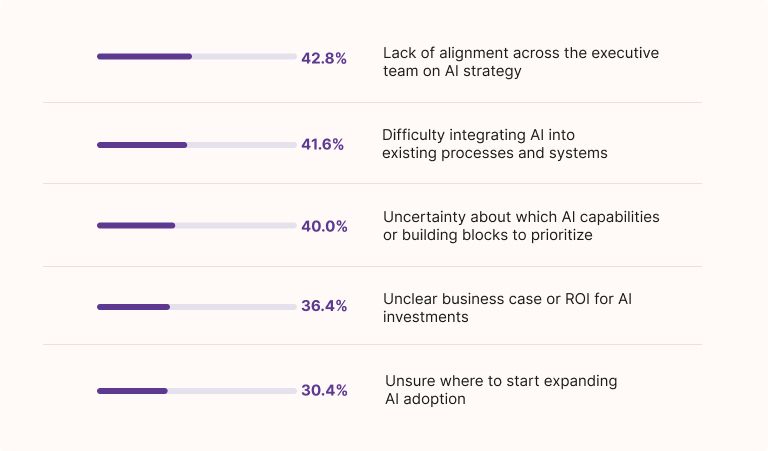
Leadership misalignment at the execution level, together with integration challenges across EDA toolchains, manufacturing execution systems, skills gaps, and IP-sensitive environments, is constraining enterprise-wide AI scale.
Our experience with semiconductor clients at HTEC reflects these findings. Organizations are actively applying AI to accelerate R&D, improve yield, enable digital twins, and differentiate through software and architecture. The next hurdle is converting these targeted wins into sustained, enterprise-level performance improvements.
Download the Semiconductor Industry Report
Complete the form below to access the report.

Download Cross-Industry View of the State of AI in 2025-2026 Report
KEY FINDINGS
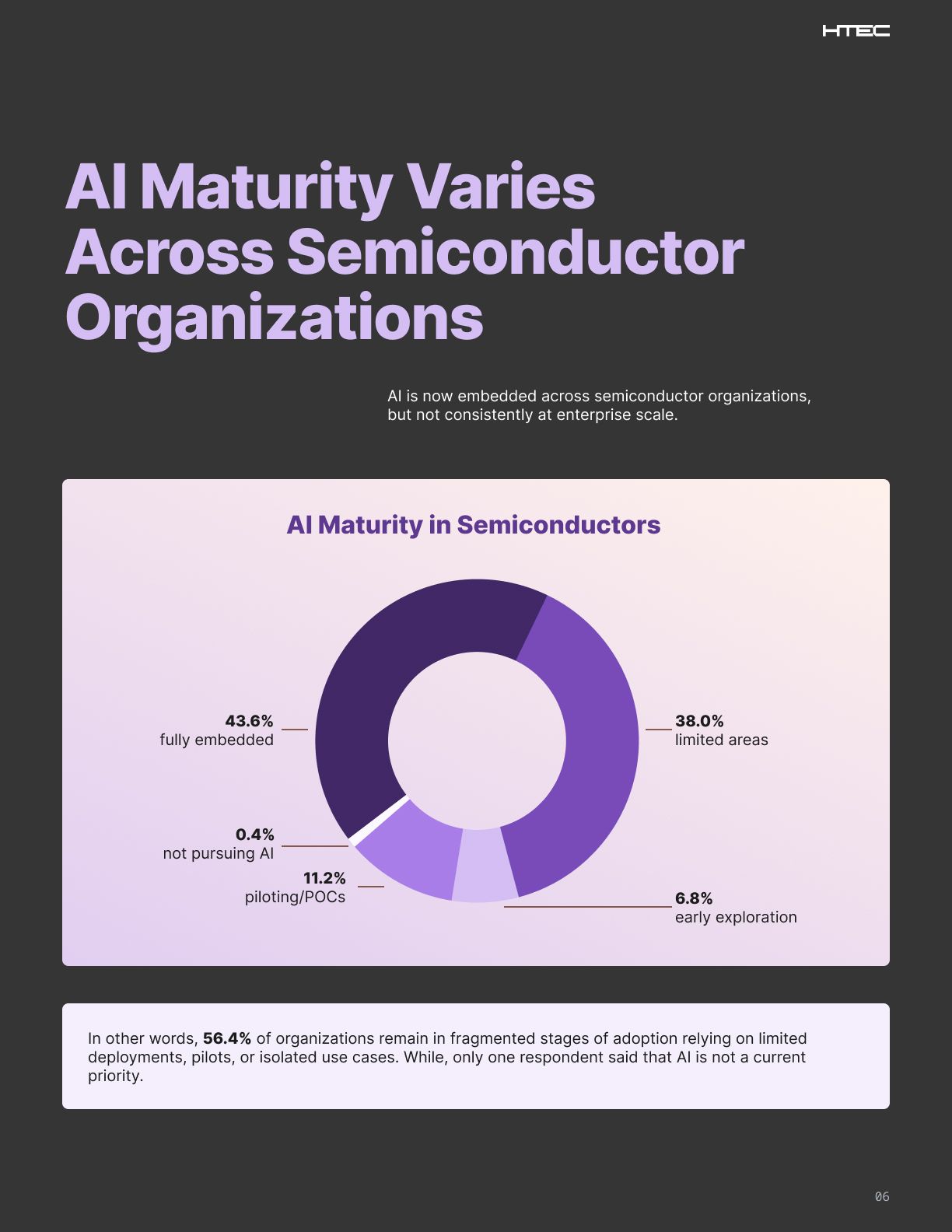
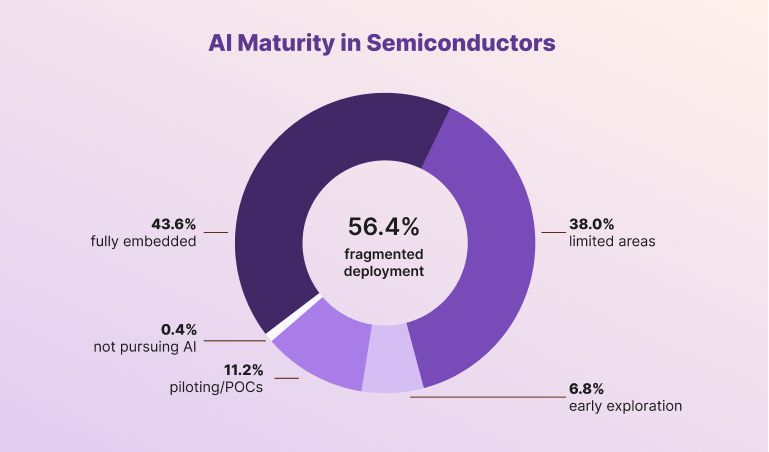
AI Adoption Maturity Across Semiconductor Organizations
All but one surveyed semiconductor organizations are pursuing AI, but fewer than half have embedded it across multiple functions.
Top Barriers to Deeper AI Integration
Edge AI: Enabling Precision and Control Across Distributed Manufacturing
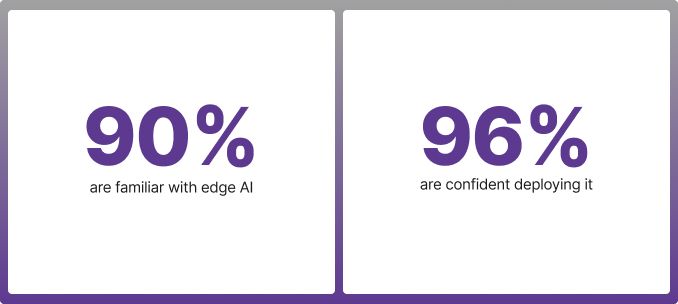
Familiarity and Confidence in
Deploying AI at the Edge
Why Semiconductor Organizations
Move AI to the Edge

How They Approach
Edge-to-Cloud Integration
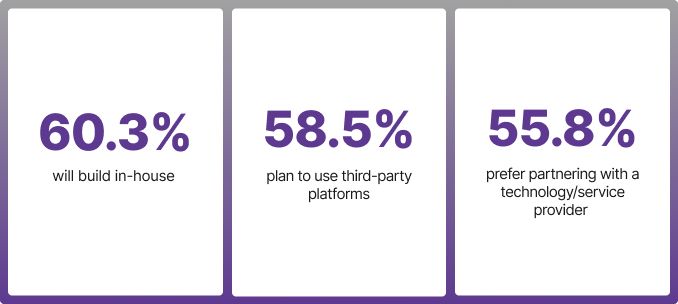
Edge-to-cloud integration in semiconductors is inherently hybrid, reflecting the need to retain domain control and IP ownership while leveraging scalable platforms and external expertise:
- Internal builds preserve architectural control and IP ownership
- Platforms provide scalable foundations and repeatable patterns
- Partners accelerate delivery and provide specialized expertise that fills internal skills gaps
Notably, among the six industries analyzed in the broader cross-industry report—healthcare, automotive, telecommunications, financial services and insurance, retail, and semiconductors—the semiconductor sector is the only one where building in-house ranks as the leading strategy.
AI Transformation Is a Multi-Year Execution Challenge
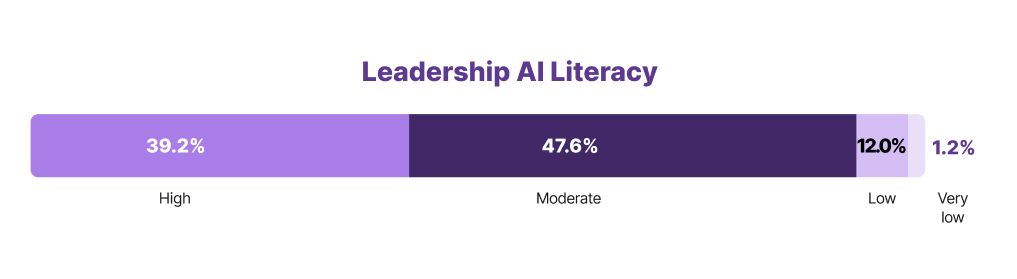
Executive AI
Literacy
According to their self-evaluation, semiconductor leaders are not overwhelmingly confident (68.8% Moderate or Low literacy levels) in applying AI strategically, indicating that execution maturity still lags ambition.
Keeping Pace Is Challenging
Leaders estimate that falling behind on AI and edge initiatives would set their organizations back by nearly
1.77 years on average
Only
27.4%
believe they can adopt and scale AI rapidly.
Methodology
The report was commissioned by HTEC and conducted by Censuswide.
It includes insights from 250 C-level semiconductor executives, gathered as part of broader global research into the perspectives of 1,529 C-suite executives across the USA, UK, Germany, Spain, Saudi Arabia, and the UAE, spanning CEO, CIO, CTO, CDO, CFO, COO, CPO, and CSO roles.
For the cross-industry executive view on AI transformation, please see our Cross-Industry View of the State of AI in 2025-2026.
What next?
The results reflect organizations in transition: confident in AI’s importance, but still working through the realities of scaling, integration, and execution. While AI is now firmly embedded on the executive agenda, turning adoption into coordinated, enterprise-wide impact remains a work in progress.
Access the full report for deeper data, cross-industry insights, and practical guidance on how leaders can move from fragmented adoption to scalable AI transformation.

Download the Semiconductor Industry Report