
AI has become a strategic priority across sectors, and the telecommunications industry is no exception. Operators are investing, experimenting, and searching for ways to embed AI across their organizations. Yet, the technology is moving faster than most organizations can absorb, and that gap between potential and execution is where transformation efforts are quietly breaking down.
Organizational Absorption as the Primary Constraint
Most telco executives agree on one thing when it comes to AI transformation timelines: progress takes longer than expected. That’s not a complaint about the technology, but a diagnosis of something more structural. The potential for AI to change outcomes across a telco is far greater than the average organization’s ability to act on it. Even when the tools exist, the use cases are clear, and the ROI math works, the gap between knowing and doing keeps widening.
The Evolving Nature of Telco Communication
Telecoms has evolved through multiple technology transitions, from voice to data and each successive wave of connectivity demand. But the current transition asks something fundamentally different from the industry. The communication model is shifting from people talking to people toward agents talking to agents, and the infrastructure that once carried calls and data now needs to support a world where AI systems interact, transact, and make decisions autonomously. A simple upgrade won’t suffice this time. What is needed is a redesign.
The commercial pressure hasn’t let up either. Cost control remains the default setting for most telco leadership, and that’s not irrational given that margins are tight, OPEX runs high, and any change still needs to make financial sense under close scrutiny. The challenge is that cost-cutting alone doesn’t get a telco where it needs to go. AI offers a way to do both, driving down operational costs in the near term while building the products and services that generate new revenue in the next phase.
Early Divergence Among Tier-One Operators
What’s easy to miss in the day-to-day of telco strategy discussions is that the competitive picture is already shifting. Some tier-one operators, historically not the fastest movers, have quietly built the partnerships and internal capabilities to lead on AI, while others are still debating roadmaps. That difference will be very hard to close once it becomes fully established.
The telcos pulling ahead share something in common: they’re not just buying AI tools or running pilots, but rethinking how decisions get made, how operations run, and what kind of products they’re bringing to market. Internal AI adoption drives the efficiency gains that fund everything else, and 2026 is shaping up as the year when AI-powered services on the edge move from experiment to commercial reality.
HTEC’s own research backs this up. The operators with the clearest path forward are those treating AI as an operational and commercial redesign rather than a technology procurement decision. You can read the full findings in the HTEC State of AI in Telecommunications 2025-2026 report.
The Limits of Strategy-Only Partnerships
Here’s what tends to happen when a telco engages a technology partner on AI transformation. The partner delivers a strategy, maybe a proof of concept and a set of recommendations, and then the telco is left to figure out how to implement it across systems that are fragmented, teams that are stretched, and an organization that wasn’t designed to move at this pace. This requires work across infrastructure, applications, and customer experience in a coordinated way. Most strategy partnerships aren’t structured to operate in that way.
HTEC’s capability spans silicon to software to service design, which means the work doesn’t stop at the point where most advisory engagements end, but continues through execution, measurement, and the kind of iteration that builds organizational capability over time. For a telco trying to compress decision times, automate the right workflows, and launch AI-native products without disrupting existing operations, having a partner who can work at every layer of the stack meaningfully changes the pace of what’s possible.
Operational Efficiency and Edge Services as Parallel Priorities
Two priorities emerge as critical in 2026, and the ability to pursue both in parallel will define which telcos move ahead. The first is embedding AI into internal operations to improve efficiency through automation, reduce manual work, and enable real-time visibility that shifts operations from reactive to proactive. The second builds on that foundation: launching differentiated AI-powered services that customers need and competitors cannot easily replicate.
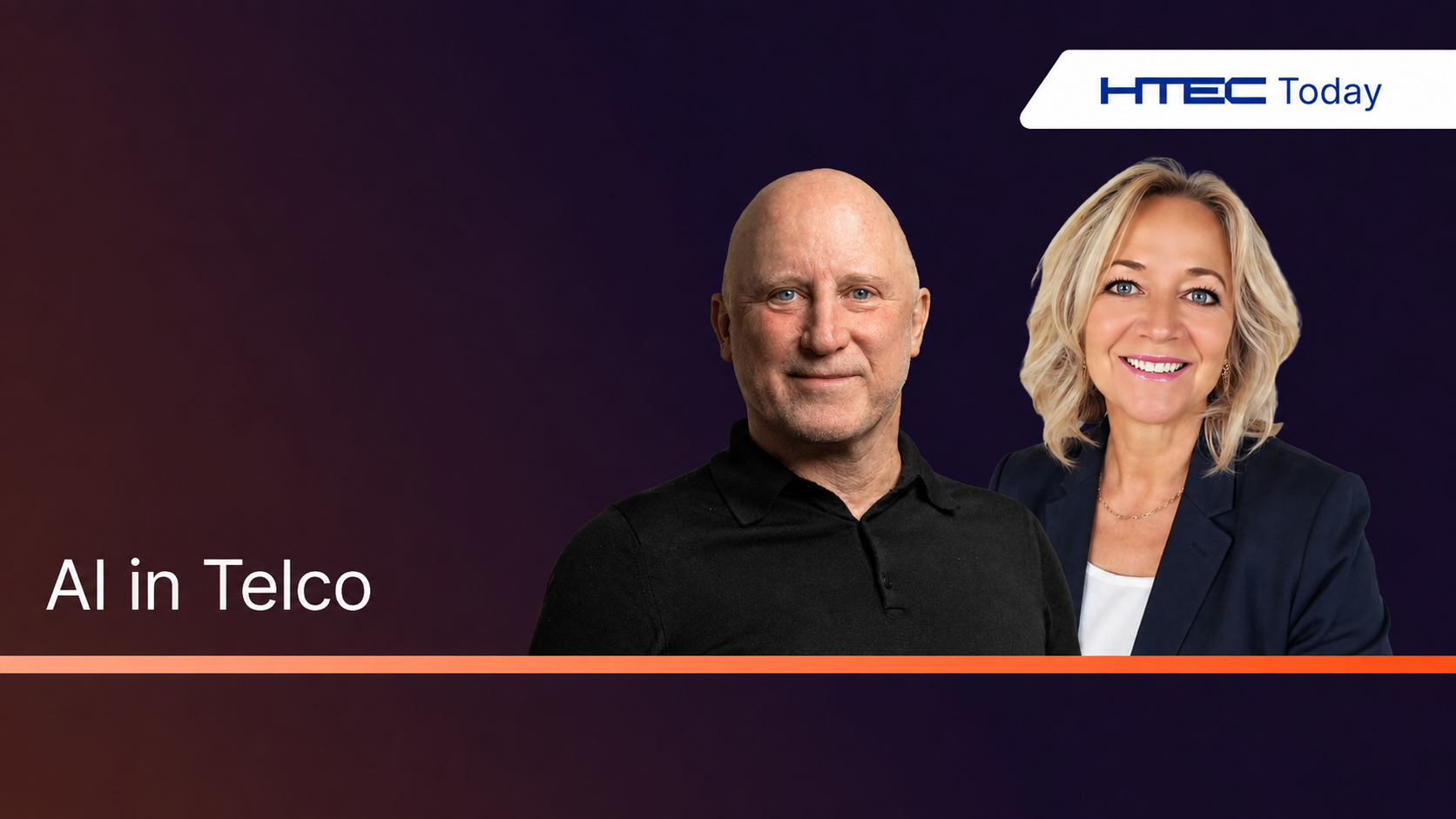
Philip Otley, HTEC Global Managing Partner, talks through many of these dynamics in a recent HTEC Today interview. Watch the full conversation here.