


Enabling the autonomous telco: AI-Powered OpEx for intelligent operations
Laying the foundation for the autonomous telco — predictive, adaptive, and efficient operations driven by AI-powered insight.

Philip Otley
Global Managing Client
Partner – Telco, Infrastructure,
Media and Entertainment
The Autonomous Telco:
AI-Powered OpEx by 2030

Telcos are racing to reclaim operating margins while preparing for an autonomous future. This report reveals how AI-powered intelligence can close visibility gaps, reduce cost, and accelerate transformation.
Explore the financial impact of inaction — and the strategies that unlock efficiency, resilience, and competitive advantage on the road to 2030.

Telco’s
OpEx Visibility
Gap
Telcos spend more than 80% of revenues on OpEx, yet hidden costs remain unchecked in legacy systems and siloed data. This visibility gap weakens efficiency, slows innovation, and risks compliance penalties. AI-powered OpEx makes the invisible visible — cutting costs, boosting resilience, and restoring competitiveness in an industry under relentless pressure.

Journey to the Autonomous
Telco
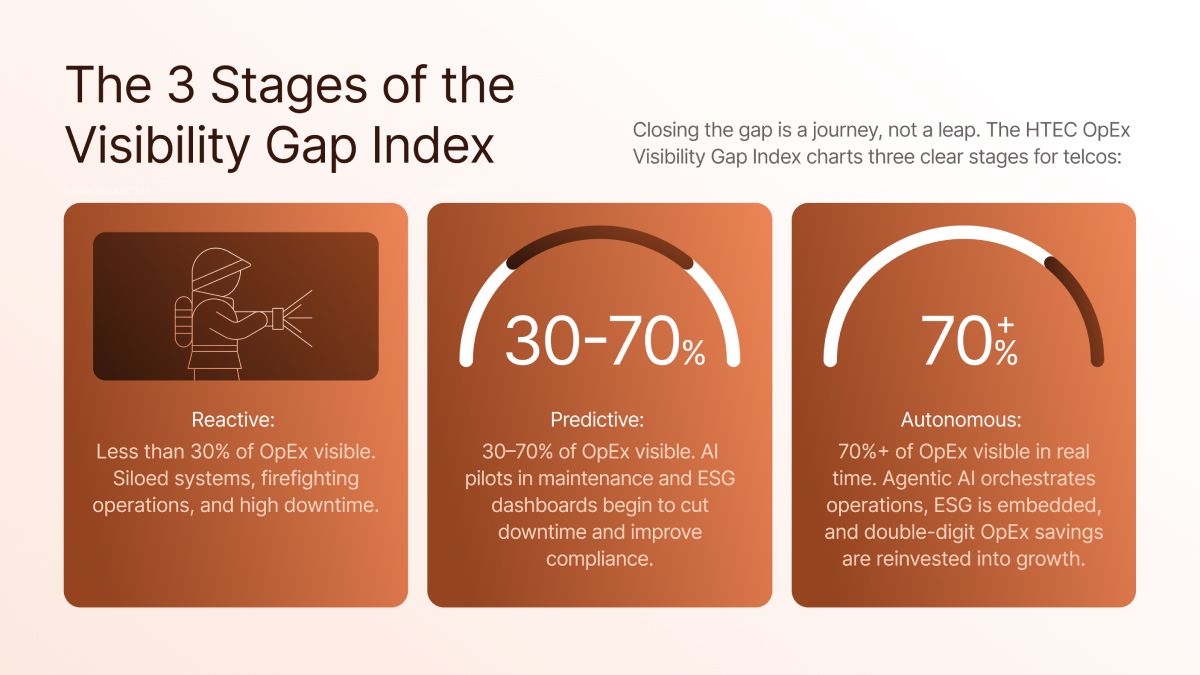
Telco operations are shifting from reactive firefighting to predictive foresight and, ultimately, autonomous, self-optimising networks. Each stage delivers measurable gains: reduced downtime, lower maintenance costs, energy efficiency, and freed growth capital. Pioneers like BT, Vodafone, and Colt are already proving the impact. The question is how quickly operators can scale these wins enterprise-wide.

Turning Telco
Efficiency into
Growth
For telcos, efficiency is no longer tactical — it is strategic growth capital. AI-powered OpEx unlocks billions for 5G, edge, and digital platforms while embedding ESG leadership. By 2030, Autonomous Telcos will deliver reliability, responsiveness, and trust at scale. Laggards will remain burdened by opacity, flat margins, and churn. Efficiency will determine who leads the next decade of telecom.


Frequently asked questions
Curious how AI is reshaping telecom operations? Below are some of the most common questions about its role in improving efficiency, reducing OpEx, strengthening resilience, and accelerating the journey to the Autonomous Telco.
What is the telecom OpEx visibility gap?
It’s the lack of transparency into telcos’ operating costs, caused by legacy systems, silos, and fragmented data.
Why is closing the telecom visibility gap urgent?
Because rising costs, ESG rules, and investor pressure make efficiency and transparency mission-critical for competitiveness.
How does AI improve telecom operating efficiency?
AI enables predictive maintenance, cost transparency, and energy optimisation — cutting downtime, errors, and unnecessary spending.
What benefits do telcos gain from AI-powered OpEx?
Reduced costs, improved resilience, accelerated 5G rollouts, stronger ESG compliance, and capital for growth initiatives.
What are the stages of becoming an Autonomous Telco?
Operators progress from reactive firefighting, to predictive foresight, and ultimately to fully autonomous, self-optimising networks.
Which telecom operators are already closing the visibility gap?
Leaders like BT, Vodafone, and Colt demonstrate predictive maintenance, expense reconciliation, and energy optimisation in practice.
What risks do telcos face if they delay AI adoption?
Delayed operators face churn, compliance penalties, higher OpEx, flat margins, and declining valuations compared to proactive peers.
Where can
we help?
Complete the form and an HTEC expert will contact you shortly.
Looking to join our team?
Visit our Careers & Culture page
